WordPress Web Design New York – Expert Development Services
You’re not just choosing someone to build a website. You’re choosing a partner who will help your website perform better, support faster marketing execution, attract relevant traffic, and scale as your business grows. Put 17+ years of experience to work on your next website project with WPoets.
You’ve spent enough time researching New York agencies that sound alike. Now try WPoets.
Trusted Worldwide for WordPress Excellence



New York WordPress Services
WordPress Website Development

WPoets creates premium, customized WordPress websites that are easy to operate, easy to publish on, SEO-friendly, user-friendly, and high-performing.
Our goal is to turn your website into a publishing platform so that day-to-day marketing, SEO, and content teams can publish more often, execute campaigns faster, maintain brand consistency, improve SEO execution, and support business growth.
Your website should not become an obstacle for your marketing, SEO, and content teams. The quality of the platform and its publishing workflow has a direct impact on how effectively your teams can execute their digital marketing strategy.
This includes quickly creating and managing landing pages, campaign pages, product pages, service pages, case studies, blogs, events, webinars, whitepapers, e-books, resource pages, industry pages, and lead-generation pages without depending on developers.
When marketing and SEO teams can publish quickly and consistently, and the platform supports technical SEO, the business has a stronger foundation for organic growth.
This can support:
- Publish high-quality content more consistently
- Improve visibility across search engines
- Drive more organic traffic to the website
- Attract more relevant, high-intent visitors
- Increase visitor engagement with your content
- Launch and execute marketing campaigns faster
- Create more opportunities to convert visitors into prospects
- Generate more qualified leads for the sales team
- Respond faster to changing market opportunities
- Get more value and better ROI from your marketing efforts
This does not mean that a website alone guarantees rankings, traffic, or the number of leads.
Instead, a well-designed WordPress platform gives your marketing and SEO teams the foundation they need to execute their plan quickly and consistently.
Third-Party API Integrations with WordPress

Your business does not rely on just one system. Your website may run on WordPress, while your CRM, marketing automation, payment system, booking platform, and other business systems run on completely different technologies.
These are questions many companies ask us when they want to integrate
- Can WordPress connect with our existing tools?
- Can you integrate our specific third-party system?
WordPress can connect with a wide range of third-party systems through APIs, webhooks through plugins, or custom development, provided the external system offers the necessary integration capabilities.
Before we recommend an approach, we first understand how your systems need to work together. We look at:
- What data the external system needs to exchange
- What WordPress needs to send or receive
- Whether the data needs to be synchronized in real time or at scheduled intervals
- What APIs or other integration mechanisms the external system provides
- How the integration fits into your existing business workflow
Once we understand these requirements, our WordPress experts determine the most appropriate integration approach.
With our experience in WordPress API integrations and custom third-party integrations, you don’t have to start by figuring out whether something is technically possible.
We can connect your WordPress website with a wide range of systems, including:
- CRM platforms (Zoho, Salesforce, HubSpot)
- Marketing automation platforms (SendGrid, Mailchimp, ActiveCampaign, Klaviyo)
- Payment gateways (Stripe, PayPal, Authorize.net)
- Forms and lead-generation systems
- Custom APIs
- Mobile applications
Tell us what systems you use and what you want them to do, and we’ll assess the right way to make them work with WordPress
WordPress multisite

WordPress Multisite is a practical solution for organizations that need to manage multiple websites from a single WordPress installation while allowing each website to retain its own content, users, settings, and configuration.
This can be particularly valuable when businesses need to:
- Expand into new countries
- Launch new regional websites
- Add new cities or locations
- Create franchise websites
- Add departmental or business-unit websites
- Launch campaign or microsites
- Separate websites for each language, such as websites serving multiple languages
- Multiple brands under one organization
We can set up a WordPress Multisite network that can use different URL structures. Subdirectory Structure (example.com/us/ or Subdomain Structure us.example.com or even domain mapping can also be used when each individual website needs its own domain. For example: brand-a.com or brand-b.com.
Technical SEO is handled at both the individual website level and the overall network level.
Important considerations include:
- Proper URL architecture
- Unique metadata and content for each site
- XML sitemaps
- Canonical URLs
- hreflang where sites target different languages or regions
- Avoiding duplicate content across sites
Fully Managed WordPress Service

Your website is more than just a marketing tool; it’s a business-critical platform that helps with operations, customer experience, and growth.
We provide the complete WordPress lifecycle under one roof, so you can work with one partner instead of several vendors.This reduces communication gaps, speeds up decision-making, enhances collaboration, and establishes clear accountability.
Our in-house multidisciplinary team consists of WordPress consultants, UI/UX designers, WordPress developers, Senior WordPress consultants, DevOps engineers, and Project Managers.
Before development, our senior consultants offer strategic WordPress advice and design technical architectures for enterprise, high-traffic, multilingual, multisite, custom applications, and complex integrations.
Our UI/UX team works with visitors and content editors to create reusable design systems, UI components, illustrations, icons, infographics, hero banners, website graphics, and branding assets.
Custom development includes Gutenberg blocks, functionality, enterprise workflows, multisite, multilingual features, integrations, customer portals, and web applications.
We value clean code, security, scalability, accessibility, Core Web Vitals, performance, and maintainability. Managed services include cloud infrastructure, hosting, DevOps, CDN, load balancing, auto-scaling, security, monitoring, disaster recovery, and backup.
Following launch, we provide maintenance, improvements, features, optimization, security, content and landing page support, and Core Web Vitals enhancements while monitoring uptime, server health, Google Search Console, performance, and traffic.
A single integrated team provides faster service, consistent quality, improved communication, lower overhead, reduced risk, and easier management. As your long-term technology partner, we ensure that your website is secure, scalable, high-performance, and aligned with business growth.
WordPress Multilingual
We develop multilingual WordPress websites with multiple languages such as English, German, French, etc
This is implemented through WordPress plugins WPML or Polylang or through a third-party multilingual service.
You get to decide how you want your multilingual website’s URLs to work, based on your business needs.
Directory-based, such as yourwebsite.com/en or yourwebsite.com/fr.
But we can also set up the other options too, like en.yourwebsite.com and language-specific domains too, yourwebsite.fr.
Also, all the media (images, PDFs, docs, or videos) uploaded by your team can be attached to each appropriate language version of the content.
Where certain markets (APAC, Europe, GCC) demand localized assets (translated PDFs, market-specific imagery, language-specific marketing materials, etc.), you can maintain separate media versions for each locale.
We also plan your website’s multilingual SEO architecture from day one, not as an afterthought once the website is live. This ensures your SEO team can manage the multilingual SEO easily.
This includes
- Language-specific URLs for easy management of your content
- Setting the correct canonical URLs to guide search engines to the preferred version.
- hreflang to specify connections among different languages or regional versions.
- Language-specific XML sitemaps help search engines find the appropriate localized URL.
- Prevent duplicate content issues by properly translating and localizing pages and tags.
A well-structured multilingual website enables your marketing, content, and SEO teams to deliver a consistent message across target audiences in different markets.
What Clients Say
What Clients Say


WPoets has enhanced the website’s performance, workflow, and tracking. The team has managed the project well and communicated effectively through email, messaging apps, and virtual meetings. Their reliability and clear communication are commendable.

Web Marketing Manager.

Web Marketing Manager.
WPoets delivered the project on time, providing active communication on the progress of the work. The team managed the project well and communicated effectively through virtual meetings and emails. Moreover, WPoets’ responsiveness and transparency were key elements of their performance.
Digital Corporate Comm Manager

Digital Corporate Comm Manager
WPoets has met all the deadlines and ensured excellent communication through a dedicated single point of contact and a proactive reporting structure. The team has provided weekly sprint updates and demo calls at major milestones. Overall, the client has enjoyed working with WPoets’ team.

Owner

Owner
How do we compare with other agencies in New York
What Most WordPress Agencies Do

Most WordPress agencies build sites using page builders and install many plugins.
Whereas this approach does offer a quick way of building the site, each page builder, add-on, and plugin means more CSS, JS, and database calls.
With time, the website will start experiencing issues such as slow page speeds, Core Web Vitals issues, plugin conflicts, and a hard-to-manage backend.
There are agencies that make direct modifications in the core files, themes, or plugins of WordPress in order to provide custom functionality.
It is quite easy at the start, but such modifications cause problems whenever WordPress, themes, or plugins get updated or upgraded.
In the long run, it makes it harder to maintain and upgrade the website.
There are many organizations that regard security as a consideration to be addressed as afterthought.
Lack of sufficient monitoring, poor access controls, inefficient backup procedures, and reactive security measures may result in risks that may increase over time.
The problem is that such businesses realize the existence of such a threat only after it happens.
Many WordPress agencies use a different plugin for each client’s needs, such as forms, search, caching, pop-ups, banners, sliders, and so forth.
While this may hasten the development process, it may also add plugin dependencies, maintenance costs, vulnerabilities, and increase the chances of compatibility problems.
The website becomes more complicated and costly to manage over time.
Post-launch support may be limited with some WordPress agencies.
As their priorities shift to other projects, they may not keep your website updated, resolve performance issues, or monitor security.
This may lead your internal team to take up the task, which can distract marketing and internal teams from more important business tasks.


WPoets uses the built-in Gutenberg editor of WordPress along with our Awesome Enterprise theme framework to build lean and scalable websites.
We design reusable Gutenberg blocks to give the marketing team the ability to edit their own content without depending on developers for doing that.
This approach helps us create efficient websites while keeping the frontend code lean and avoiding unnecessary complexity.
WPoets uses an update-friendly development methodology that leaves WordPress core, themes, and plugins untouched.
Instead, the custom functionality is developed using custom themes, plugins, templates, modules, and services, and not by altering WordPress core and any third-party plugins.
This ensures the stability of the website and also makes future updates and enhancements much easier.
At WPoets, security is a priority.
We adhere to OWASP security guidelines and also practice other best practices in security such as MFA, malware scanning, file integrity monitoring, firewall settings, and backups.
This proactive approach helps us identify potential security threats early.
WPoets builds WordPress systems around your business processes, content, and requirements while keeping plugin usage deliberate and controlled.
We focus on creating custom Gutenberg blocks, editorial workflows, dashboards, and integrations instead of relying heavily on third-party plugins and page-builder extensions.
If a plugin is needed, we recommend vetted and reputable plugins that meet our standards for security, stability, and long-term reliability.
WPoets offers 30 days of support post-launch and further supports the site via our retainer services for those organizations that require a WordPress partner for the long haul.
Our maintenance packages include WordPress core updates, theme and plugin updates, security monitoring, backups, uptime monitoring, malware scanning, performance tuning, and even development hours.
This gives your organization the time to concentrate on marketing, content creation, lead generation, and expansion of the business.
Our Process


Initial Consultation and Strategy Planning
Finding the right WordPress agency isn’t easy. You may have spent weeks researching companies, reviewing portfolios, attending sales meetings, and comparing proposals, yet still wonder, “Do they really understand our business?”
That’s exactly why our discovery call is different.
Our process begins with a free initial consultation. We start by listening to you and your team to understand your business challenges, goals, target audience, user needs, user journeys, key actions visitors should take, website objectives, customer expectations, and your vision for a new or upgraded website.
During this consultation, we take the time to understand what you want the new website to achieve, how you want it to look and feel, what you like or dislike about your existing website, the features or experiences you want to introduce, and how the new website should differ from the current one.
Based on this discussion, we’ll create project specifications, including the number of unique pages, required functionalities, website structure, integrations, technical, design and content requirements, expected deliverables, project priorities, and timelines or deadlines. We listen first and recommend a solution based on what your project actually needs.
Our experts will also gather detailed information about your existing website, including its structure and information architecture, design complexity, content types, number of unique pages, functionality, custom features, third-party integrations, workflows, what is working well, and areas needing improvement. This detailed evaluation is especially important for redesign, upgrade, or migration projects.
We also review competitor websites shared by you to understand common user experiences, learn where competitors perform well, identify areas for improvement, and find opportunities for your website to differentiate and stand out. Only after we have thoroughly understood these details do we recommend a solution, positioning ourselves as a strategic partner rather than simply a development vendor.


Tailored Solutions & Proposal
We spend time understanding your business goals, technical requirements, and project priorities and recommend a solution tailored to your specific needs, ensuring it aligns with your purpose, objectives, challenges, and long-term vision.
Based on the number of pages, unique page templates, UI/UX design requirements, custom functionality, custom workflows, third-party API integrations, multilingual needs, content migration, and other technical considerations, we create the proposal.
This detailed planning enables us to provide realistic timelines, accurate effort estimates, and transparent pricing before development begins.
We encourage open and honest discussions about your budget from the beginning. Understanding your investment range enables us to recommend the best approach, prioritize the features that add the most business value, and maximize your return on investment while remaining within your budget.
A successful website requires ongoing maintenance after it has gone live. That is why we discuss why maintenance and retainer plans are required after the website is launched. Most businesses need ongoing security updates, performance optimization, feature enhancements, technical support, and continuous improvement since they don’t have the time or internal team to ensure their enterprise websites are secure, scalable, and ready for future business growth.
If necessary, we will schedule a dedicated proposal walkthrough to review every section in detail. We respond to questions from your marketing, IT, procurement, leadership, or other stakeholders, ensuring that everyone understands the project scope, timelines, deliverables, and implementation approach before proceeding.
Once the project begins, you’ll have a single point of contact who will manage the project, allocate resources according to the needs, make sure the work is delivered within the deadline, deliver quality work with full QA, conduct UAT, and ensure a smooth go-live process throughout the project. The CX Manager will also remain your dedicated point of contact after launch, supporting you throughout maintenance, retainer plans, and any other ongoing engagement.
Our relationship does not end when your website goes live. The goal is not just to launch your website, but we help your website grow alongside your organization by providing ongoing maintenance, performance optimization, feature enhancements, technical support, and continuous improvements. That’s why many of our clients stay with us for five years or more.


Design Phase: Bringing Ideas to Life
Our design process starts by understanding your target audience, whether you are B2B or B2C, and identifying your ideal customer profile (ICP). Based on this understanding, we define the design layout, photography, site structure, navigation, overall user experience, and conversion objectives to create the right fit for your audience and business aims.
We begin with low-fidelity wireframes using simple black-and-white layouts. These wireframes outline the page structure, key elements, functionality, and user flow of each page before visual design begins. We present the wireframes to your team, gather feedback, make revisions as needed, and ensure the structure aligns with your business objectives, website vision, and user requirements.
Once the wireframes are approved, we move into high-fidelity designs, incorporating your established brand guidelines, color schemes, typography, imagery, graphics, buttons, animations, and other visual elements. Our goal is to create engaging, pixel-perfect, intuitive, and easy-to-use designs that guide users toward the actions needed to achieve your desired business goals.
We then share high-fidelity prototypes with your team for review, gather feedback, and make the necessary updates and refinements until the designs are approved.
Once the designs are approved, we move into WordPress development, following the agreed WordPress theme or custom theme strategy. Development begins concurrently as individual pages and components are approved. We develop the approved pages, features, and functionality on a staging server for review and testing. Where appropriate, we use custom WordPress themes rather than off-the-shelf templates to support faster load times, long-term scalability, flexibility, and maintainability. Throughout the design and development phases, our Agile approach structures the work into sprints, supporting iterative development, flexibility, transparency, collaboration, and ongoing improvement. Your team remains actively involved throughout the project by providing feedback at key milestones and participating in important design and development decisions.
This complete process results in a website that brings together strong visual design, intuitive user experience, performance, scalability, and business requirements, creating a cohesive digital experience tailored to your audience and business goals.


Development and Testing: Ensuring Quality and Performance
As soon as your designs are approved, our developers begin building them in parallel on the development server.
Throughout the development process, we’ll keep you in the loop on which pages we’re working on, which pages have been completed, which pages are ready for review, and what’s up next. We take any feedback, answer any questions, and plan work for the next development cycle.
We use an Agile development approach, which breaks down the project into manageable chunks—weekly sprints, if you will. That way, your project is always moving forward.
Regular review meetings will be conducted either daily or twice a week, depending on the pace and complexity of your project.
Before we begin creating individual pages, we identify the common elements that appear throughout website designs.
Our developers use your approved Figma, Adobe XD, PSD, or other design files to convert these recurring design elements into reusable Gutenberg blocks.
These typically include hero banners, sliders, testimonials, call-to-action sections, process sections, FAQs, forms, navigation menus, headers, footers, sidebars, and other reusable content blocks that appear on multiple pages.
This component-first approach has long-term benefits for your marketing team.
They can easily create new landing pages, publish campaign pages, or update existing content without having to rely on developers for each change.
Instead of building webpages randomly, we use a planned approach.
The homepage is the starting point for development because it establishes the overall design language and technical foundation for the remainder of the website.
Along with it, we create the primary reusable components that appear throughout the site, such as headers, footers, navigation menus, forms, and reusable Gutenberg blocks.
Once the homepage is completed, we will proceed to create the remaining pages: About, Services, Products, Resources, Case Studies, Whitepapers, Blogs, Contact, landing pages, and any other pages specified in your project scope.
Once a page or feature is complete, it undergoes our internal quality assurance process to ensure it meets our quality standards. After that, pages are moved from the development server to the staging server.
Then we complete one final round of quality assurance, verify all approved content, images, links, and functionality, and perform a final review to ensure everything is ready for production.
Before your website is launched, your team conducts User Acceptance Testing (UAT).
We then migrate the website from the staging environment to the production server, update DNS settings so visitors are directed to the new website, and carry out comprehensive post-launch testing to confirm that pages, forms, integrations, redirects, and other critical functionality continue working as expected.
Following launch, we closely monitor the website to identify and resolve any issues quickly should they arise.


Launch and Beyond: Ongoing Support and Maintenance
Launch marks the start of our long-term partnership, not the end. You will receive one month of complimentary post-launch support to ensure a smooth transition.
Every launch is meticulously planned to avoid downtime and disruption to business operations. Visitors will have a smooth transition to your new website, while your marketing and content teams will find the new website far easier to manage than the previous one.
After launch, our team is available by phone or email to answer any questions and provide assistance.
We continuously monitor website uptime, server health, server resources, website availability, performance, and traffic patterns.
We use Google Search Console to monitor sitemap submission, indexing status, crawl errors, 404 errors, and search performance.
We also continuously track Page Speed, Core Web Vitals, website performance, and page speed optimization. Post-launch issues are identified and addressed as soon as possible, before they affect users.
After the initial one month of complimentary support, depending on the maintenance plan selected, various tasks are performed, including content additions and updates, landing page creation, website improvements, page speed optimization, WordPress core updates, plugin updates, security patches, malware scanning, regular backups, backup restoration, hosting management, and performance optimization.
Our continuous improvement plans enable your website to evolve in response to changing business and marketing requirements.
Rather than allowing the website to remain static after launch, we continuously optimize and improve it as your needs change. We also actively seek client feedback to improve communication, delivery, and support quality.
We believe in long-term partnerships rather than completing one-time projects.
Many clients continue to work with us for years—some for 2 or 3 years, some for 5, and even some for 10 years—through ongoing maintenance and continuous improvement engagements.
We handle the technical maintenance behind the scenes, allowing your team to focus on marketing, sales, and business growth.
Our goal is to ensure that your website remains secure, fast, reliable, and constantly improving throughout its lifespan.
Till Now, We Have Built Over 3500 WordPress Websites.
As a leading digital agency for WordPress development in New York, we have partnered with many businesses across various industries, from innovative schools to enterprise brands, and have brought brand philosophies to life through custom WordPress websites. We build effective website solutions that deliver impressive results.
Our portfolio highlights our dedication to excellence and our deep understanding of the WordPress platform. Work with us, and you will never have to find another WordPress agency again.
We always prioritize quality, creativity, and innovation. Our team of WordPress experts has many years of experience, and they use the latest techniques.
We want to create websites that meet and exceed our clients’ expectations.
Case studies
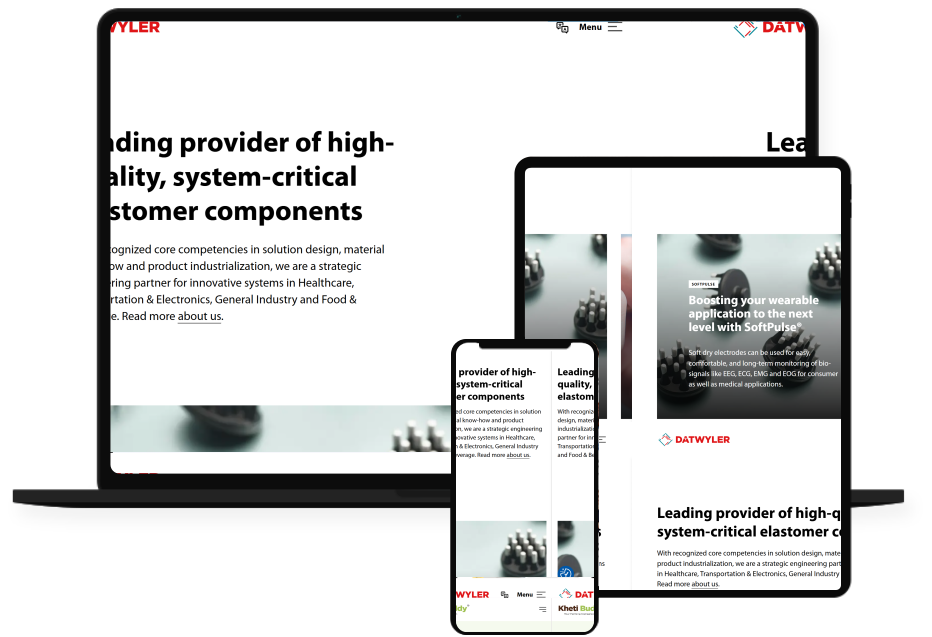

Inside a 1:1 replatform from Kirby to WordPress for a Swiss-listed global manufacturer
Development, DevOps, Migration
Manufacturing
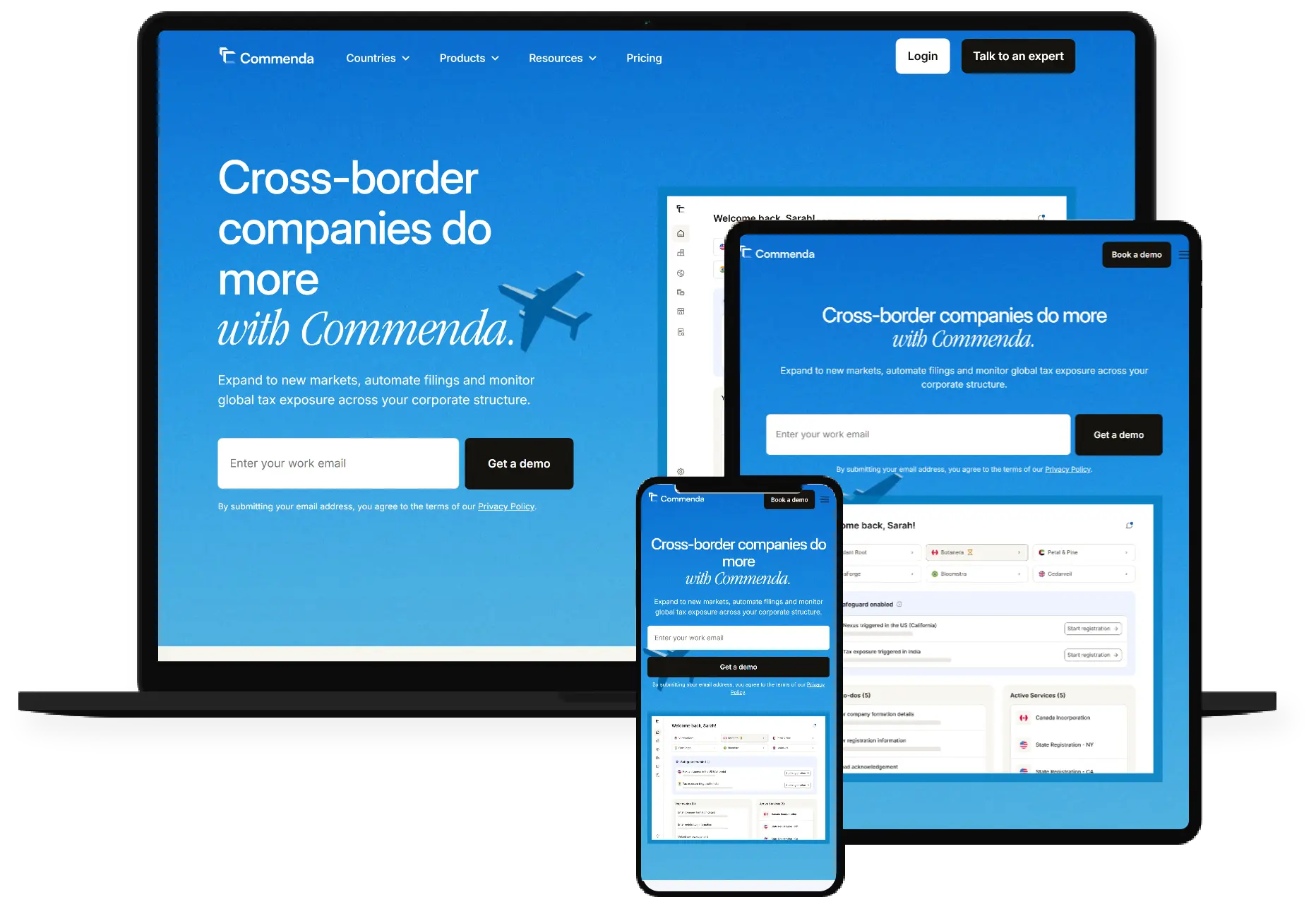

From Webflow Limits to WordPress Freedom: The Commenda.io Website Transformation
Development, DevOps, Migration
Technology
FAQs
What types of third-party systems can you integrate with WordPress?
We can seamlessly connect your WordPress website to any or all of the following systems:
- CRM platforms: Zoho, Salesforce, HubSpot
- Marketing automation platforms: SendGrid, Mailchimp, ActiveCampaign, Klaviyo
- Booking and scheduling systems
- Payment gateways: Stripe, PayPal, Authorize.net
- Forms and lead-generation systems
- Mobile applications
- Other third-party platforms your business relies on
What URL structures are supported by WordPress Multisite?
WordPress lets you set up the URL structure the way you want. When you enable Multisite, you choose between two common structures:
- Subdirectory: each site lives under one domain—yourwebsite.com/us/ or yourwebsite.com/uk/.
- Subdomain: each site gets its own subdomain—us.yourwebsite.com, uk.yourwebsite.com
If individual sites need to be hosted on separate domains, such as brand-a.com and brand-b.com, WordPress makes it easy to do so with a feature called domain mapping. This lets you point any custom domain to the site in your network that you want to show it off on.