Reach New Markets with Multilingual Websites on WordPress
You’ve spent weeks comparing agencies, reviewing portfolios, evaluating proposals, and trying to identify which agency can actually deliver on your expectations. We understand that choosing a multilingual website development partner is a significant decision, especially when the next redevelopment may not happen for another two or three years.
At WPoets, you get a team that understands your business priorities and takes ownership of the technical execution, so you can move forward knowing your website is in capable hands.
Trusted Worldwide for WordPress Excellence











WordPress Multilingual Websites Built to Work in Every Language
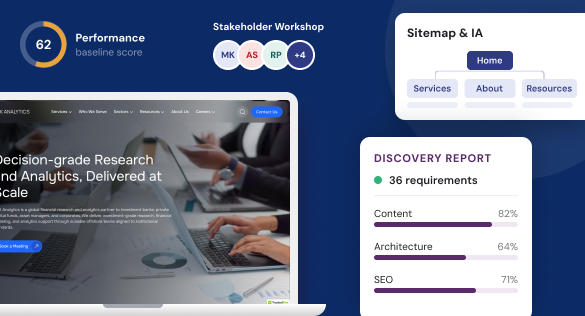
A multilingual website should help your customers in various markets easily access, understand, and interact with your business. WPoets will help you create a WordPress website that provides a consistent multilingual experience without becoming complicated as the website grows.
Creating a multilingual website involves more than translating page content. The website’s architecture, language structure, translation workflows, user experience, and content management processes must be planned carefully. It also requires configuring the appropriate multilingual plugin, implementing international SEO practices, and ensuring compatibility with WooCommerce where eCommerce functionality is needed.
Whether it is a new website, you are adding multiple languages to your existing website, or fixing your current multilingual setup, WPoets will be able to do all the technical work. We configure multilingual plugins, add languages within the website and its URLs, set up international SEO settings, support multilingual WooCommerce websites, and develop multi-region WordPress websites that can have more languages added later as your business grows.
For organizations serving multilingual audiences, the right architecture can help reduce language barriers while keeping the experience consistent across regions.
What’s Included in Our WordPress Multilingual Services
Creating a multilingual WordPress website requires much more than just translating pages into other languages. The architecture, plugin settings, translation workflow, implementation of SEO, governance of content, and maintenance have a great impact on the performance of the website.
At WPoets, we offer our assistance for the whole lifecycle of multilingual implementation. No matter whether you are going to launch a multilingual website from scratch, extend an existing one, or optimize it – we’ll create a solution that fits your business and its needs.

Multilingual Architecture & Strategy
Creating a good multilingual WordPress website requires proper architecture first. Before implementing any translation plugins or tools, we estimate how the website will be used and how it will evolve.
For example, how many languages and regions do you need to support? How much content is going to need to be translated?
This will give you an idea of how to architect for the currently supported languages as well as for future languages that your business will add.
The requirements for the editorial processes, the organization of your team that adds the content, SEO requirements, WooCommerce capabilities, the architecture of your WordPress website, the addition of more languages, and more are all analyzed.
When it comes to setting up a multilingual website, there is no one-size-fits-all solution. While a good solution for a content-driven website may not be the best solution for an e-commerce store with multiple regions, we design a solid multilingual foundation that will meet your current needs and grow with your business.

Plugin Selection & Setup
WordPress has numerous multilingual plugins and third-party solutions, namely WPML, Polylang, Weglot, and TranslatePress. Each of them has its own advantages and disadvantages, as well as different workflows and maintenance requirements.
Choosing the right WordPress multilingual translation solution requires looking beyond the feature list. WPoets considers whether a WordPress multilingual plugin/solution supports the content model, editorial workflow, SEO requirements, WooCommerce requirements, and technical architecture of your website.
We also consider content inventory, languages, translation workflows, WooCommerce needs, SEO requirements, editing processes, budget, and expectations regarding maintenance in the future.
For organizations evaluating the best WordPress translation plugins, the right choice depends on the project. Some projects may benefit from a full-featured solution, while others may require a lighter WordPress plugin or a translation layer.

Multilingual SEO & hreflang Implementation
The proper structure of each language and regional version is crucial for search engines to understand the relationships between the alternate versions of the website. WPoets will ensure all the necessary technical SEO aspects for multilingual WordPress websites, such as language-specific URLs, hreflang tags, canonicals, localized metadata, XML sitemaps, internal links, redirects, indexing control, and structured data, are properly implemented.
Multilingual SEO also needs to account for URL translation and the way translated URLs are represented. Where required, WPoets can translate URLs while maintaining a logical URL structure and preserving existing search signals.
However, an incorrect multilingual SEO configuration can cause contradictions, make international SEO less effective, or cause difficulties in identifying which page versions belong to particular languages or countries.
For that reason, multilingual SEO is regarded as a part of website architecture, not a separate aspect applied later when translation is done. The implementation can also consider search engine optimization requirements for every language version.

WooCommerce Multilingual Setup
When creating a multilingual WooCommerce website, there are more considerations than simply translating your store’s content. Your product catalog, descriptions, category labels, attribute names, cart interface, checkout process, transactional emails, and any other customer-facing aspects could potentially be multilingual.
If you consider the regional needs of the marketplace you’re targeting, the implementation may get even more complicated because currency, shipping details, taxes, payment processes, and product information may also change with the language.
WPoets makes all of these things possible for you so that you can sell to customers in their native language. This can help businesses reach a global audience without forcing customers to navigate the store in an unfamiliar language.


Complete Site Translation, Not Just Content
WPoets takes a website-wide approach to multilingual website implementation, helping ensure that the website’s structure, functionality, and interface support multiple languages.
This includes navigation, menus, buttons, forms, labels, theme strings, error/validation messages, searches, widgets, taxonomies, custom post types, custom fields, metadata, and automated emails. For WooCommerce websites, this includes translations for e-commerce and all the features that come with it.
This means the entire site is considered, including all the pages.
Content translation is provided by the client. We focus on implementing the multilingual functionality and configuring the website to support translated content across its different components.
It can include language files, translation data, forms, interface strings, and other elements that affect the customer experience.
The idea behind this approach is to create a full and consistent experience for users in each language.
Language Switcher UX
The language switcher provides a convenient transition to another language while retaining the context of the page viewed by the visitor. The following aspects are to be considered in relation to the language switcher: location, visibility, mobile-friendliness, consistency, accessibility, and a clear indicator of the chosen language.
Where there are translated pages available, the language switcher will help the user navigate to the particular translation of the web page, not to the language’s current page. The language switcher’s behavior should be defined for different website elements, including navigation menus, content pages, forms, and other key sections, to ensure users can access the appropriate language options.
The language switcher can also account for the visitor’s preferred language, the default language, and the available language versions. This becomes particularly useful when a site serves multiple languages across different regions.
Multilingual Approaches We Support
There is no universal solution when it comes to creating multilingual websites. The choice of the most effective method will depend on your way of content management approach, the level of independence you require, your SEO team’s needs, and future website development.
WPoets supports various multilingual architectures and assists enterprises in choosing an appropriate architecture that will fit their WordPress system and goals.
Multilingual plugins like WPML, Polylang, TranslatePress, and many others can handle several language versions hosted in one WordPress installation. Such a solution may suit websites where several language versions have a lot of common content, and teams need to manage all of it in one WordPress installation.
A centralized system may help with content management, publishing, and maintenance, but its complexity may grow depending on the number of languages, content types, integration, and special needs of each market.
The right translation plugin can also provide multilingual support for content types that need to be managed regularly. Depending on the plugin, the implementation supports custom post types, taxonomies, metadata, and other structured content.
WordPress translation plugins should be evaluated based on the business’s requirements. If a plugin has already been selected, its translation capabilities should be assessed against those requirements to determine whether it is the right fit or if a better alternative should be considered.
A translation layer can be helpful if the company has to implement various languages rapidly. It can decrease the workload of implementing multilingual functionality on the site.
A translation layer may also provide automatic translation and allow teams to review content through manual editing. Depending on the provider, the free version may offer limited functionality, while paid plans may provide broader translation capabilities.
WordPress Multisite can suit organizations that need various sites under one WordPress system but with different content and administration requirements for each of them.
It is a practical choice for enterprise companies with independent regional teams, various models of governance, content related only to specific countries, or several regional websites.
Multisite is not the right choice for every multilingual project. We assess content relationships, regional team responsibilities, plugin compatibility, hosting requirements, security, and ongoing maintenance to determine whether Multisite or a single WordPress installation with a multilingual plugin is the better fit.
Some companies need each market to operate independently. For them, having different WordPress sites in separate languages or regions on different domains can offer more flexibility.
It is a good choice in case markets have different branding, product lines, content strategy, or regional autonomy.
However, this solution requires a higher content management overhead, including hosting, deployment, updates, integration, SEO management, and maintenance of each website.
For some organizations, standalone multilingual sites are appropriate when regional teams need independent control over their content and publishing.
Multilingual SEO Implementation for WordPress Websites
Adding languages to your website is a great way to expand your reach. But to be found by search engines and be readable, every language as well as every regional version of your website has to be discoverable and readable for search engines.
Multilingual SEO works best when it is considered during the website architecture and development stage rather than added after translated pages are already live.
At WPoets, we consider multilingual SEO when setting up a WordPress implementation. This includes the URLs, hreflang links, metadata, internal links, sitemaps, and the ongoing check to ensure all versions of a website have been correctly indexed by search engines.
Language-Specific URL Structure
hreflang Implementation
Canonical Tags
Translated Metadata
XML Sitemaps & Indexing
Internal Linking
International SEO Monitoring
To enable both users and search engines to identify the appropriate language version for a website, consistent URLs must be established. A typical layout for different languages on a website could be as follows:
- /fr/ for French
- /de/ for German
- /es/ for Spanish
However, subdirectories for language versions are not necessarily the best choice. It depends on the markets you are operating in, your brand name, your SEO strategy, and more. Maybe subdomains or even country-specific top-level domain names are more suitable for your website.
Each case is unique. For instance, a global company with operations in different markets may wish to use country domain names for languages, whereas a company with markets in primarily one region may choose to use subdomains or even subdirectories for languages.
Another aspect of consistent URLs is the correct language code. By using the correct language code for all language versions of your website, you can create clear relationships between them and help your search engine results with your multilingual SEO.
The hreflang tag can be used by search engines to determine the languages as well as regional variations of alternative versions of a webpage. This can include variations such as English, French, German, and other languages, as well as regional versions for a language such as English for the USA and English for the UK.
WPoets implements hreflang for multilingual SEO, so search engines have clear signals on the languages and the regional variants available on your website as part of the complete multilingual SEO process.
Canonical tags are used to provide signals for search engines on which URL is preferred when there are similar or duplicate URLs. In the multilingual website setting, canonicalization should be implemented correctly among the translated pages.
Two pages that are covering the same subject matter and are conveying the same message can be serving different audiences in different languages. For example, a fully translated French version of a given English page would be considered a language version of that page rather than duplicate content even though the information provided is the same.
The translations of your website content should also be translated in the metadata of SEO. The metadata should be worded so that the search results pages display the relevant content for the language and geographic area of the users.
Make sure the SEO title tags and the meta descriptions for every language version are unique and are written with the same attention as the visible page content and include the correct keywords as needed for your local search marketing efforts.
- Open Graph and social-sharing metadata: The titles, descriptions, images, and preview information that websites sharing links via social media will be displaying to their users.
- Image information: Localize image alt text and title attributes, image captions, etc.
- Structured data: A website can include structured data on a page. The most common source for such data is Schema.org. For localizing such data, one needs to translate page names, descriptions, and language information. Also, other data related to a website could be translated and thus localized.
Search engines have to be able to distinguish between the various language and regional versions of your website. In the sitemap’s XML files, we configure the language-specific URLs for the multilingual website and set up the necessary indexing for it.
Our implementation can include:
- Language-specific URLs: All relevant language versions have to be included in the corresponding XML sitemaps.
- Hreflang annotations: Define relationships between equivalent pages in different languages and/or regionally adapted pages.
- Canonical references: Configure the canonical tags for the respective languages.
- Indexing controls: Ensure pages designed for search and visible to users are indexed, and that pages not meant to be indexed are not.
- By setting up your website’s language versions correctly and linking them to each other, search engines can provide the right language or regional version to users everywhere.
Internal links provide navigation through the various sections of the website. Multilingual implementations need to consider language-based navigation, contextual linking, related content, and cross-linking of relevant translations.
The language switcher also becomes important because it enables the user to jump between the equivalent language versions while preserving the context of the page they were browsing.
Multilingual SEO is not a one-time process that ends when the website is deployed. With the addition of new languages and new pages, it is necessary to keep on monitoring for any technical or indexing problems.
WPoets can assist you in conducting regular checks for these using various online tools like Google Search Console for indexing, coverage, crawling, and visibility problems. WPoets also looks out for instances of search engines indexing an unintended language version or failing to identify the alternate language relationships.
This continuous process will enable the business to detect multilingual SEO problems at an early stage.
For teams using Yoast SEO or Rank Math, we can also review how its configuration interacts with the multilingual implementation and whether metadata, canonicals, and sitemap settings are being handled correctly.
Multilingual SEO Implementation for WordPress Websites
Adding languages to your website is a great way to expand your reach. But to be found by search engines and be readable, every language as well as every regional version of your website has to be discoverable and readable for search engines.
Multilingual SEO works best when it is considered during the website architecture and development stage rather than added after translated pages are already live.
At WPoets, we consider multilingual SEO when setting up a WordPress implementation. This includes the URLs, hreflang links, metadata, internal links, sitemaps, and the ongoing check to ensure all versions of a website have been correctly indexed by search engines.
Language-Specific URL Structure
To enable both users and search engines to identify the appropriate language version for a website, consistent URLs must be established. A typical layout for different languages on a website could be as follows:
- /fr/ for French
- /de/ for German
- /es/ for Spanish
However, subdirectories for language versions are not necessarily the best choice. It depends on the markets you are operating in, your brand name, your SEO strategy, and more. Maybe subdomains or even country-specific top-level domain names are more suitable for your website.
Each case is unique. For instance, a global company with operations in different markets may wish to use country domain names for languages, whereas a company with markets in primarily one region may choose to use subdomains or even subdirectories for languages.
Another aspect of consistent URLs is the correct language code. By using the correct language code for all language versions of your website, you can create clear relationships between them and help your search engine results with your multilingual SEO.
hreflang Implementation
The hreflang tag can be used by search engines to determine the languages as well as regional variations of alternative versions of a webpage. This can include variations such as English, French, German, and other languages, as well as regional versions for a language such as English for the USA and English for the UK.
WPoets implements hreflang for multilingual SEO, so search engines have clear signals on the languages and the regional variants available on your website as part of the complete multilingual SEO process.
Canonical Tags
Canonical tags are used to provide signals for search engines on which URL is preferred when there are similar or duplicate URLs. In the multilingual website setting, canonicalization should be implemented correctly among the translated pages.
Two pages that are covering the same subject matter and are conveying the same message can be serving different audiences in different languages. For example, a fully translated French version of a given English page would be considered a language version of that page rather than duplicate content even though the information provided is the same.
Translated Metadata
The translations of your website content should also be translated in the metadata of SEO. The metadata should be worded so that the search results pages display the relevant content for the language and geographic area of the users.
Make sure the SEO title tags and the meta descriptions for every language version are unique and are written with the same attention as the visible page content and include the correct keywords as needed for your local search marketing efforts.
- Open Graph and social-sharing metadata: The titles, descriptions, images, and preview information that websites sharing links via social media will be displaying to their users.
- Image information: Localize image alt text and title attributes, image captions, etc.
- Structured data: A website can include structured data on a page. The most common source for such data is Schema.org. For localizing such data, one needs to translate page names, descriptions, and language information. Also, other data related to a website could be translated and thus localized.
XML Sitemaps & Indexing
Search engines have to be able to distinguish between the various language and regional versions of your website. In the sitemap’s XML files, we configure the language-specific URLs for the multilingual website and set up the necessary indexing for it.
Our implementation can include:
- Language-specific URLs: All relevant language versions have to be included in the corresponding XML sitemaps.
- Hreflang annotations: Define relationships between equivalent pages in different languages and/or regionally adapted pages.
- Canonical references: Configure the canonical tags for the respective languages.
- Indexing controls: Ensure pages designed for search and visible to users are indexed, and that pages not meant to be indexed are not.
- By setting up your website’s language versions correctly and linking them to each other, search engines can provide the right language or regional version to users everywhere.
Internal Linking
Internal links provide navigation through the various sections of the website. Multilingual implementations need to consider language-based navigation, contextual linking, related content, and cross-linking of relevant translations.
The language switcher also becomes important because it enables the user to jump between the equivalent language versions while preserving the context of the page they were browsing.
International SEO Monitoring
Multilingual SEO is not a one-time process that ends when the website is deployed. With the addition of new languages and new pages, it is necessary to keep on monitoring for any technical or indexing problems.
WPoets can assist you in conducting regular checks for these using various online tools like Google Search Console for indexing, coverage, crawling, and visibility problems. WPoets also looks out for instances of search engines indexing an unintended language version or failing to identify the alternate language relationships.
This continuous process will enable the business to detect multilingual SEO problems at an early stage.
For teams using Yoast SEO or Rank Math, we can also review how its configuration interacts with the multilingual implementation and whether metadata, canonicals, and sitemap settings are being handled correctly.
Multilingual Websites on WordPress for Enterprise & Multi-Region Organizations
For enterprises, multilingual WordPress implementation often involves more than just adding languages to an existing website. A company may be merging multiple websites, migrating from another CMS, consolidating country-specific websites into WordPress, or simplifying its existing multilingual architecture.
WPoets supports enterprise-level migrations and implementations involving large content databases, websites serving multiple countries and languages, and high-traffic websites.
This may include migration of content from multiple regional websites to one central WordPress system, setting up WordPress Multisite if needed, preserving language-specific URLs, mapping of translated content, custom post types and field migration, and re-establishment of APIs and other third-party connections.
First, we evaluate your current architecture, content, language and URL structure, metadata, and integrations, as well as your team’s requirements. Based on this analysis, we define an appropriate architecture for your WordPress installation.
We will also make sure to preserve SEO signals and the language relationships as they were in the original setup.
Enterprise Migration Considerations
For enterprise multilingual migrations, a balance must be found between centralization and localization. Central teams of an enterprise set out standards for security, SEO, analytics, and technology for the entire company, while local teams are given scope for market-specific products, content, and publishing guidelines.
At WPoets, we support an enterprise-structured workflow by providing features such as role-based access control, content governance, and publishing in multilingual content workflows, API integration with analytics, and SEO management. We also test the performance and scalability of the WordPress environment in detail.
As a result of our migration process, you get a WordPress environment that brings your legacy or fragmented multilingual setup into one unified platform.
Multilingual setup for Global Commerce
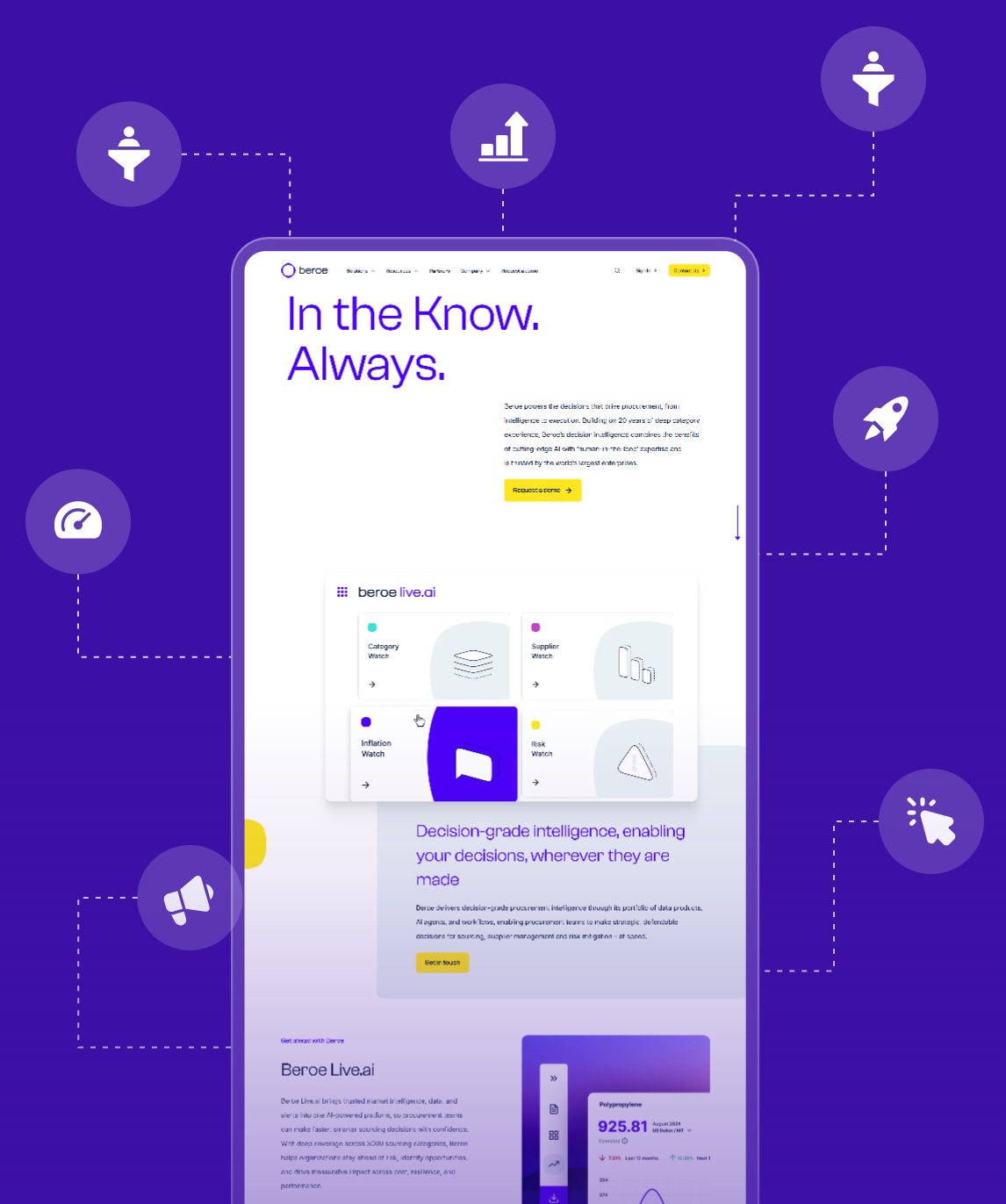
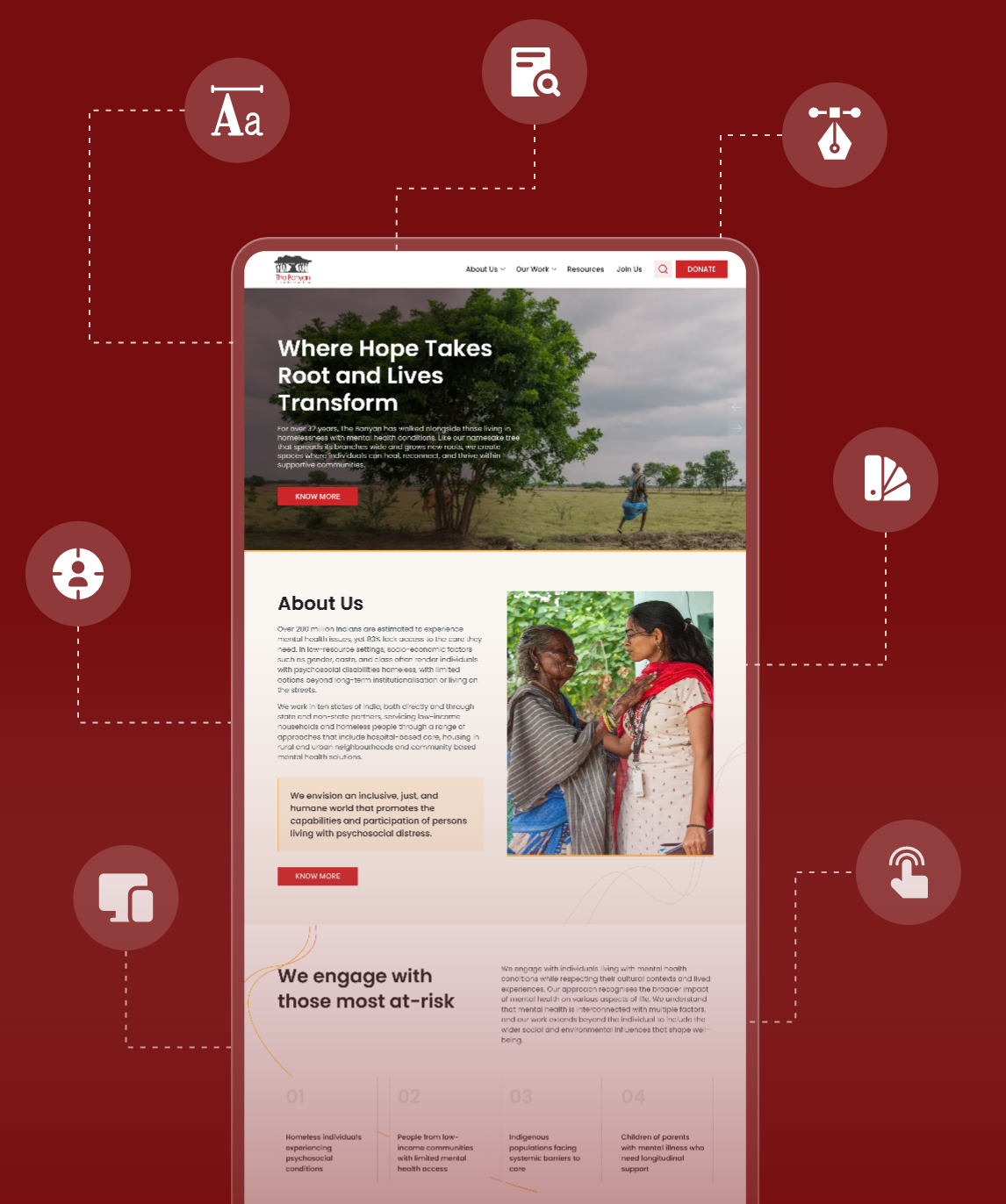
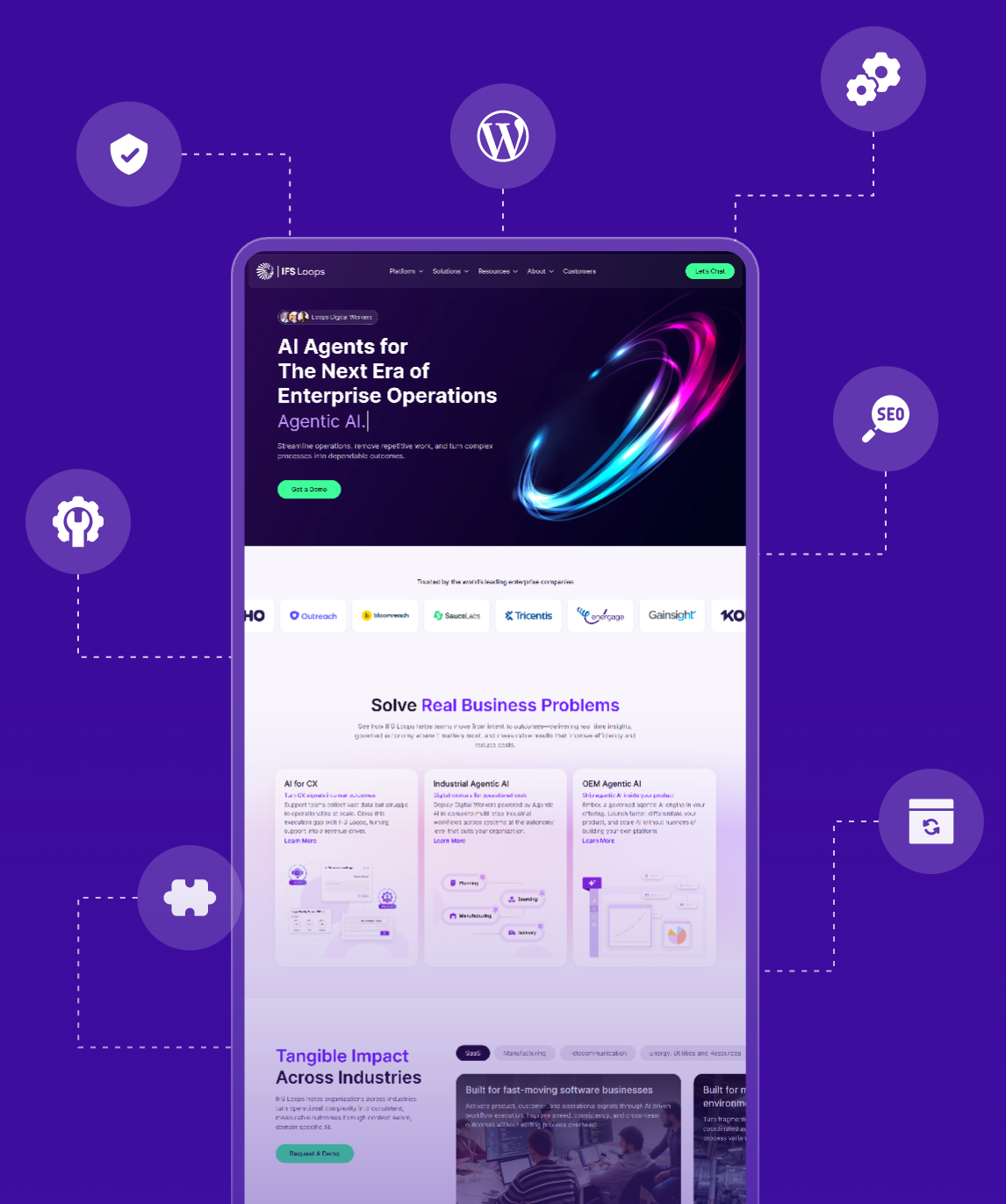
Making a WooCommerce store multilingual involves more than translating product descriptions. Customers must be able to browse products, select variations, complete checkout, and manage their accounts seamlessly in their preferred language.
WPoets implements multilingual WooCommerce solutions covering product names and descriptions, categories, attributes, variations, cart and checkout, customer accounts, transactional emails, and other customer-facing elements.
We also address multilingual SEO, including language-specific product and category URLs, metadata, and other relevant SEO elements, to help each language version reach its intended audience.
Our approach focuses on delivering a consistent shopping experience across languages while ensuring that the multilingual setup aligns with your store’s functionality, integrations, and business requirements.
Language Localization
Language localization refers to the process of adapting a website or online store in terms of language and content to the respective target audience.
Products, all navigation items, checkout labels, customer account pages, and transactional emails on your online store will display content corresponding to customers’ language preferences.
In addition to language localization, the purchasing requirements for customers in different countries, even when speaking the same language, need to be accommodated by a web store.
This means that commerce can be localized for different countries by enabling such things as different currencies, shipping options, tax and payment methods, and even product availability.
Country-Specific Commerce Localization
Region/country-specific commerce localization refers to the different e-commerce store settings for different countries, such as currencies, available shipping to different countries, tax rates, payment methods that are available to customers in a country, products that are available in a country, etc.
For example, you could create a single shop for US and UK customers who speak English and have that website display different currencies, different shipping options, correct tax rates, and accepted payment methods.
Similarly, you could have a German-language WooCommerce store serving customers in Germany while supporting the same language across other European markets. The language experience may remain consistent, while commerce settings can be configured according to the requirements of each country.
The WPoets team evaluates language and country-specific commerce requirements when developing multilingual WooCommerce stores. This helps ensure that each market that you want to target receives an appropriate shopping experience based on its language preferences.
Our process for developing WordPress multilingual websites
When building multilingual WordPress websites, several factors need to be considered, including content, technology stack, hosting requirements, SEO, and your language management strategy after launch.
At WPoets, the process is systematically followed from understanding the current requirements, choosing the right approach & architecture, implementing the website, and testing across various languages.
Initial Consultation, Audit, and Strategy Planning
Here we start with the analysis of your needs for your multilingual website. This analysis can be done for a new website as well as for an already-existing website.
We analyze your current content structure to see where there may be technical, user experience, or even SEO problems with the current implementation. Based on this analysis, we choose the best multilingual architecture and technology for you.
Content & Structure Mapping
In the initial phase before the actual work starts, all the content and website elements to be made multilingual are mapped out.
This list includes all pages, products, services, case studies, ebooks, blog posts, and corresponding taxonomies, as well as website elements like menus, theme strings, all forms, metadata, and media.
This assessment tells us if the content for a specific item needs to be translated, if it needs to be localized for a specific market, or if it does not need to be translated/localized at all.
The results of this assessment will serve as the basis of our workflow and ensure that all necessary content and website features are developed as per the requirements.
Multilingual Design & UX Planning
In this phase of our process, we outline the design and user experience of different languages on your website. Here we aim to create a consistent visual identity, user experience, and brand experience on your website for all languages that the website will have.
During this phase, page layouts, navigation, typography, white space, buttons, and forms are reviewed from a design perspective for translation and for different writing systems.
This includes issues such as translated text extending or shortening, font suitability, correct character rendering, and right-to-left (RTL) layouts, if any.
Our design approach will enable consistent, flexible, and user-friendly experiences across all languages while remaining accessible, usable, and compliant with your brand guidelines across all versions.
Full-Site Multilingual Implementation
Having completed the design phase, we implement the multilingual site-wide experience. This involves content, navigation, theme strings, forms, buttons, metadata, custom fields, and all easily managed through the language switcher.
Implementation for WooCommerce sites also includes the appropriate products and commerce components.
We make sure that the different language versions complement one another rather than being treated like isolated pieces of content.
The implementation can also accommodate RTL languages, where required by the supported languages and target markets.
Multilingual SEO & Technical QA
Before the launch of the website, we will test the technical relationships between the language and regional versions of the website. These cover language-specific URLs, hreflang, canonical tags, XML sitemap, metadata, internal linking, redirects, indexing, and structured data.
In addition, we will test the entire user experience in all the languages that are going to be used by the website. This includes aspects such as navigation, language switcher, forms, search function, and content.
Launch & Ongoing Website Management
When our QA is completed, we will prepare the multilingual version of the website for its launch and verify aspects such as redirects, URLs, indexing, key functionality, technical SEO, and performance of the website.
We also offer our assistance for 30 days even after the launch.
Our Expertise
What 17+ Years of WordPress Experience Means for Your Multilingual Website
- Deep Platform Knowledge: WPoets has extensive knowledge of the WordPress platform, from architecture to plugins and themes.
- Managing Complexity: WPoets has extensive experience in handling a plethora of technical needs for websites with multiple languages and other needs, including custom post types, taxonomies, language-specific relationships, and region-specific content.
- Experience working with all scales of multilingual websites: from simple websites with a few languages to large enterprise multilingual websites with thousands of pages of content.
- Built for Long-Term Evolution: WPoets develops websites that evolve in the long run as a business enters new markets, introduces new languages, and keeps expanding its presence on the Internet.
We have been recognized on Clutch in the categories of CMS for WordPress, Development for WordPress, and Web Design for WordPress, with reviews from our clients who have worked with us on our various projects. This includes a Clutch review for multilingual website development too.
A good multilingual website can bring a lot of value to a company’s marketing, SEO, customer experience, and the operational workings of a company.
- Reach New Markets: Allow customers from around the world to learn about your products, services, and company in their native language.
- Improve Organic Search Visibility: By building a solid multilingual SEO foundation, your marketing team can better target language-specific search queries in different geographic regions and achieve greater visibility in search results.
- Marketing more efficiently: Enable your marketing teams to manage language-specific pages and regional campaigns and set up content for later publication in various languages without having to go through the developers for every minor change.
- Deliver Better Customer Experiences: Help visitors to your website better understand and navigate through your products, services, and company information in their language and market.
- Reduce Long-Term Costs: By having a sound architecture and well-written, maintainable code, your website will have fewer recurring fixes, less unnecessary rework, and less technical debt in the long run.
- Scale Without Repeated Rebuilds: Introduce additional languages, markets, products, services, content types, and integrations without having to rebuild the whole website.
We are very different from other web development firms, and this difference is evident right from the start when we connect with you about a multilingual website project.
We will ask a series of questions that are relevant to establishing the nature of your business, desired target markets, language requirements and challenges, as well as your long-term goals for your website.
Our multilingual solutions provide and deliver strong business value and a sound Return on Investment for the long term.
With our diverse team of talent, experience, and perspectives, we can meet and solve any challenges that come with building multilingual websites.
A multilingual website is more than just a sum of different language versions of your content. It can help you to enter new markets and serve international customers better.
With an optimized multilingual website, you can also increase the efficiency of your marketing activities and achieve long-term business value.
What 17+ Years of WordPress Experience Means for Your Multilingual Website
- Deep Platform Knowledge: WPoets has extensive knowledge of the WordPress platform, from architecture to plugins and themes.
- Managing Complexity: WPoets has extensive experience in handling a plethora of technical needs for websites with multiple languages and other needs, including custom post types, taxonomies, language-specific relationships, and region-specific content.
- Experience working with all scales of multilingual websites: from simple websites with a few languages to large enterprise multilingual websites with thousands of pages of content.
- Built for Long-Term Evolution: WPoets develops websites that evolve in the long run as a business enters new markets, introduces new languages, and keeps expanding its presence on the Internet.
We have been recognized on Clutch in the categories of CMS for WordPress, Development for WordPress, and Web Design for WordPress, with reviews from our clients who have worked with us on our various projects. This includes a Clutch review for multilingual website development too.
A good multilingual website can bring a lot of value to a company’s marketing, SEO, customer experience, and the operational workings of a company.
- Reach New Markets: Allow customers from around the world to learn about your products, services, and company in their native language.
- Improve Organic Search Visibility: By building a solid multilingual SEO foundation, your marketing team can better target language-specific search queries in different geographic regions and achieve greater visibility in search results.
- Marketing more efficiently: Enable your marketing teams to manage language-specific pages and regional campaigns and set up content for later publication in various languages without having to go through the developers for every minor change.
- Deliver Better Customer Experiences: Help visitors to your website better understand and navigate through your products, services, and company information in their language and market.
- Reduce Long-Term Costs: By having a sound architecture and well-written, maintainable code, your website will have fewer recurring fixes, less unnecessary rework, and less technical debt in the long run.
- Scale Without Repeated Rebuilds: Introduce additional languages, markets, products, services, content types, and integrations without having to rebuild the whole website.
We are very different from other web development firms, and this difference is evident right from the start when we connect with you about a multilingual website project.
We will ask a series of questions that are relevant to establishing the nature of your business, desired target markets, language requirements and challenges, as well as your long-term goals for your website.
Our multilingual solutions provide and deliver strong business value and a sound Return on Investment for the long term.
With our diverse team of talent, experience, and perspectives, we can meet and solve any challenges that come with building multilingual websites.
A multilingual website is more than just a sum of different language versions of your content. It can help you to enter new markets and serve international customers better.
With an optimized multilingual website, you can also increase the efficiency of your marketing activities and achieve long-term business value.
Who Is Multilingual WordPress Development For?

Global B2B Companies
Design localized marketing websites to support regional marketing, customer journeys, and lead generation in international markets while reaching a global audience.

Enterprises
Deal with multi-regional content management, central governance, regional teams, complicated integrations, and WordPress Multisites.

Publishers & Media Organizations
Handle multilingual and large content databases with well-structured editing, localization, review, and publication processes. This can include a multilingual blog, multilingual posts, and structured content.

SaaS & Technology Companies
Provide localized product offerings, documentation, resources, and conversion paths to customers consuming content in different languages and located in different parts of the world.

E-commerce Businesses
Ensure that products, categories, product variations, checkout processes, and transactional emails function correctly in all languages supported by the website, including relevant WooCommerce settings and functionality.

Organizations Expanding Internationally
Structure new languages and regional markets into your website and reach more customers without the need for separate websites.
Frequently Asked Questions
Can you share some references of multilingual websites that you have built?
Yes, we will share relevant success stories demonstrating experience with:
- Building out multilingual website architectures (eg language prefixes, region-specific content, and various page structures).
- Complex Content Structures: Multilingual pages and posts, different content for different languages for various content types such as posts and pages, images, videos & other media, and even structured content.
- Enterprise Multilingual Websites: Large multilingual sites with hundreds of pages, many languages, multiple regional sites, and corresponding complexity in managing and publishing content.
- Multilingual SEO: With hreflang tags, language- and region-specific meta tags, canonical URLs, and complete XML sitemaps for each language version, our experts ensure optimal SEO for multilingual websites.
- Multilingual WooCommerce sites. Multilingual versions of product information, special offers, and shop functionality as necessary within countries.
- RTL Language Support: We can also implement right-to-left languages such as Arabic, Hebrew, and many others by adjusting the design to fit their specific typography and layout requirements.
- Integration with External Services: You may need to connect a multilingual website to external services such as a CRM system, marketing automation platform, online payment gateways, etc.
- CMS Migration: WPoets helps customers move CMS-based websites (e.g., Sitecore, Kentico, Drupal, Joomla) to WordPress, along with specific features, content in the various languages, URL structure, SEO metadata, and much more.
By sharing relevant case studies, we will enable you to build confidence in us instead of just promises that we are able to deliver a multilingual website of the required complexity.
What Determines the Cost of a Multilingual WordPress Website?
The cost of a multilingual WordPress website depends on factors such as the number of languages, the volume of content to be managed, the complexity of the website’s architecture, and the integrations required.
Number of Languages
The addition of each new language means that there will be more implementation, content management, testing, and quality assurance work. A website for two languages is likely to have completely different requirements than a website for five or more languages.
Some platforms may support multiple languages, but supporting additional languages still creates practical requirements for content, review, QA, and maintenance.
Content Volume
The amount of content to be translated and migrated into the website is also an important consideration, since the translation and organization of 20 pages is very different from translating and organizing 10,000 pages into different languages.
E-commerce functionality and its complexity.
If you have an e-commerce website, then the scope could include currencies, product variations, shipping, taxes, checkout process, payment gateways, customer accounts, and transactional emails. The country-specific commerce requirements would also come into the picture.
Existing Website Condition
The condition of the existing website is an important factor in estimating the migration project scope. A well-maintained website with organized content and compatible plugins may require fewer adjustments during migration, while a highly customized website with plugin conflicts, content inconsistencies, or existing multilingual issues may require additional work to ensure a smooth transition.
SEO Requirements
SEO considerations related to language-specific URLs, URL migration, hreflang, translated metadata, canonical tags, redirects, XML sitemaps, internal linking, and indexing will be considered as part of the scope for multilingual SEO.
Architecture
Finally, the architecture of the underlying system will determine the scope. Plugin-based single-site installation, WordPress Multisite, individual regional domains, and hybrid architecture would all be different scenarios.
Get a Scope-Based Estimate
Instead of using standard multilingual website pricing, WPoets can make an estimate depending on the specifics of your project. WPoets will examine your website architecture, languages used, content volume, business needs, and technical needs in order to define the scope of work required.
What's the difference between translation and localization?
Translation refers to the process of turning content on your website into another language and ensuring that the message is original.
While simple translation may be sufficient if you’re selling the same products and services to visitors, localization can also include altering other website elements like products and services offered, currencies, date formats, images, special offers, legislative requirements, and calls to action in order to best reach your target audience.
Which multilingual plugin is best: WPML, Polylang, Weglot, or TranslatePress?
Different WordPress websites have different multilingual requirements, so the right plugin or solution should be chosen based on the website’s specific needs.
This depends on your website content architecture, number of languages, SEO needs, integrations, translation workflows, and needs for WooCommerce, among other things.
WPoets considers all those factors before suggesting the best approach to use for the website.
The best WordPress translation plugin for one organization may not be the right choice for another. Factors such as supported languages, content types, SEO, workflows, WooCommerce, and maintenance should guide the decision.
Can you fix an existing poorly implemented multilingual WordPress website?
Yes. WPoets will audit your current multilingual site and find out what the issues might be from the architecture, plugins used, content, user experience, and SEO perspective. We will either fix or reconfigure your multilingual website.
Do you translate content yourselves or manage the translation workflow?
We don’t provide translation services. WPoets focuses on developing multilingual WordPress websites and implementing the technical solutions needed to manage content across languages.
We help businesses configure translation plugins, organize language-specific content, and establish workflows that make it easier to manage translated pages and updates.
Businesses can continue using their existing professional translation services, online translation services, or professional translators while WPoets handles the technical integration.
This allows businesses to work with their preferred translation providers while ensuring that translations are properly integrated into the website and remain manageable as the website grows.
Can you set up a multilingual WooCommerce store?
Yes. WPoets will be able to implement a multilingual WooCommerce website that includes multilingual versions of product names and descriptions, product categories and attributes, variations, cart and checkout pages, user profiles, and other transactional information.
Will a multilingual setup affect my SEO?
A good multilingual implementation can allow the website to be successfully localized for international SEO.
However, problems with language-specific URLs, hreflang tags, canonical tags, translation of metadata, internal linking, and indexing may confuse search engines.
For this reason, multilingual SEO should be planned as part of the architecture rather than added after the website has already been translated.
What is hreflang, and why does it matter?
hreflang is an HTML element that indicates to the search engine what language and regional version of a page is targeted at a certain audience.
It can, for instance, connect the English, French, and German versions of the page.
Implementation of the hreflang tag makes it easier for search engines to understand the connection between alternate language or regional URLs.
Should each language have its own URL structure?
A URL structure is supposed to be distinct for each language. The most common structures are
- language directories such as yourwebsite.com/fr/ or yourwebsite.com/de/,
- subdomains, fr.yourwebstite.com, de.yourwebsite.com
- country-based domains. yourwebsite.de, yourwebsite.fr
The correct URL structure varies from site to site, depending on a number of considerations, and there are no universal rules here.
Does adding multiple languages slow down my website?
Having several languages on a website will not slow down a WordPress website per se. There are other factors to consider, including the multilingual structure, the amount of content, caching, integration, and others.
Can we add more languages later without rebuilding the website?
Yes, provided the website is planned and architected for scalability from the beginning.
WPoets builds multilingual website architecture, content structures, and translation workflows that allow additional languages to be introduced without redeveloping the entire website.
The implementation is designed to accommodate new language versions while maintaining existing content relationships, URLs, and SEO configurations.
The effort required will depend on the existing website architecture, multilingual implementation, and the market-specific content and functionality required for each new language.
This approach is particularly useful for organizations planning to expand into new markets or introduce additional languages as their business grows.