



Your enterprise website is not a finished asset after launch. It is a revenue channel, campaign engine, publishing system, integration layer, and trust signal that needs continuous attention.
A WordPress development retainer gives your team access to ongoing development, maintenance, and support services without restarting the sales process every time you need help.
Instead of waiting for a new quote, a new kickoff, and a new vendor ramp-up, you work with a dedicated team that already understands your stack, business goals, and technical aspects.
In this guide, we’ll break down how an enterprise WordPress retainer works, what it costs, when it beats project-based work, and how WPoets helps enterprise teams turn a website into a long-term ROI engine.
What Is an Enterprise WordPress Retainer?
A WordPress retainer is an ongoing relationship between your company and a WordPress agency for a fixed monthly fee. Retainers act as a managed service providing access to scalable resources and ongoing support, including developers, QA, DevOps, project management, and strategic consulting.
Unlike project-based work, where the scope is fixed and the engagement ends after delivery, the retainer model assumes your needs will evolve. One month you may be launching new landing pages, the next integrating third-party tools, and later building custom functionality.
Most retainer agreements include:
- Most retainers include a set number of hours each month
- Plans can range from 50 to 200 hours per month for enterprise teams.
- Clients pay a predictable monthly fee rather than an hourly rate for retainer services.
- Retainer plans are flexible and can be adjusted from month to month, and can be scaled up or down as your business needs change.
This goes beyond a standard WordPress maintenance plan. Typical maintenance services focus on essentials like WordPress core updates, theme and plugin updates, backups, uptime monitoring, and security checks.
While a WordPress retainer includes these ongoing maintenance tasks, an enterprise development retainer provides additional value through custom development, performance optimization, feature enhancements, quality assurance, and strategic roadmap planning to support long-term business growth.
What makes it enterprise-grade is the complexity it supports: complex sites, multisite networks, compliance needs, high traffic, API integrations, custom functionality, custom features, and a custom platform built on WordPress.
On the agency side, a retainer team typically includes a technical lead, WordPress developer, webmaster, designer, DevOps, QA support, or project manager.
On the client side, marketing, IT, product, or communications teams usually own priorities. The best results come from an ongoing partnership where both sides treat the site as a living product.
Why Enterprise Websites Need Continuous Investment
The launch-and-forget approach for a website creates expensive problems. A site may launch perfectly, but over time, newly added product and service pages, campaign launches, WordPress core and plugin updates, and growing content can make it slower, harder to manage, and more fragile.
Here are the common issues we see:
- Technical debt grows when WordPress core, PHP, plugins, and themes are not updated regularly.
- Marketing teams lose speed when every small change requires a new scope.
- Integrations break as CRM, analytics, or marketing automation APIs change.
- Security risk increases as vulnerabilities appear across the WordPress ecosystem.
- Performance drops as media, scripts, tracking tags, and database bloat increase.
Retainers focus on ongoing improvement rather than simply fixing problems as they arise. Instead of waiting for something to break, like a contact form malfunctioning or a campaign landing page failing during a critical launch, your development team works proactively to identify and address potential issues early.
This approach helps keep your website running smoothly, reduces unexpected disruptions, and supports better long-term performance.
Security is one of the clearest examples. Retainers provide continuous security monitoring for vulnerabilities. Continuous security monitoring is a standard component of most WordPress retainer services. Retainers conduct regular security audits to identify vulnerabilities, and priority emergency response times minimize website downtime.
This matters because a modern enterprise website is never truly finished. Your business model changes, your business grows, your offerings shift, and your customers expect faster speed, greater accessibility, and improved usability every year.
Understanding ROI in an Enterprise WordPress Environment
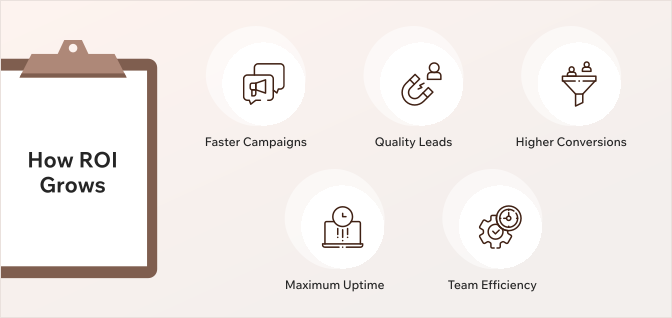
For enterprise WordPress websites, the return on investment often comes from operational and marketing efficiencies such as launching campaigns faster, attracting higher-quality leads, improving conversion rates, minimizing downtime, and removing internal bottlenecks that slow teams down.
These gains can have a significant impact on overall business performance and growth.
A WordPress development program should improve the following:
- Creating new pages for products and services
- Technical SEO fixes
- Designing images for landing pages, web pages, sliders, infographics, and e-mailers
- Conversion rates through ongoing testing and minor modifications.
- Campaign performance through faster publishing workflows.
- Website speed through speed optimization and frequent audits.
- User engagement through better navigation and content systems.
- Operational efficiency by reducing vendor coordination.
- Reliability through backups, security monitoring, and priority support.
A WordPress retainer helps keep your site running at its best through ongoing speed testing, performance monitoring, and regular optimization efforts.
Performance optimization stands as one of the most valuable services in a WordPress retainer. Website speed directly impacts user experience, search rankings, and the effectiveness of paid marketing campaigns. Even minor performance issues lead to lower engagement and missed conversion opportunities.
This includes tracking key Core Web Vitals metrics — Largest Contentful Paint (LCP), Interaction to Next Paint (INP), and Cumulative Layout Shift (CLS) — to identify and address potential issues before they affect users.
Monthly reporting is also important. Monthly reports show site performance and security status. A good report should show what changed, what improved, which risks were reduced, how many retainer hours were used, and what’s next.
The biggest ROI challenges usually come from slow development cycles, multiple vendors, technical bottlenecks, and rising maintenance costs. When no one has the full picture, the cost of coordination can exceed the cost of development work.
Retainer vs. Project-Based vs. In-House
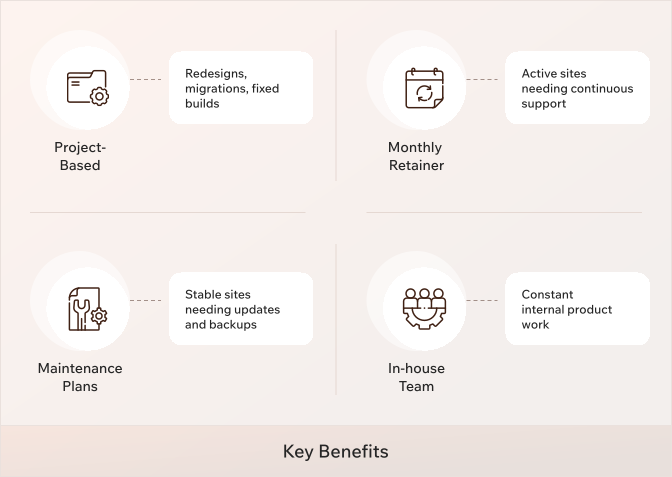
Project-based engagements are useful for major redesigns, migrations, rebrands, and similar projects with a clear finish line. But project-based delivery creates stop-start momentum for active marketing teams.
Every new project requires discovery calls, scoping, approvals, onboarding, QA planning, and context transfer. Understanding a client’s code is crucial for effective solutions and faster repairs.
A team that already knows your theme, plugins, custom blocks, hosting setup, and edge cases can solve problems faster than a vendor seeing the codebase for the first time.
An in-house team gives you control, but hiring a full-time developer is not always efficient. Salary, benefits, tools, management, QA, DevOps, and backup coverage add up quickly. WordPress retainer solutions for ongoing growth can save businesses up to one-ninth the cost of a full-time hire, especially when you need a mix of skills rather than one person.
Here’s a simple comparison:
| Model | Best for | Limitations |
| Project-based | Redesigns, migrations, fixed builds | Slow for ongoing needs |
| Basic plan or maintenance plans | Stable sites needing updates and backups | Limited new development work |
| Monthly retainer | Active sites needing continuous support | Requires clear prioritization |
| In-house team | Constant internal product work | Higher fixed costs and hiring risk |
A retainer is more cost-effective than project-based work for ongoing needs. It is also more flexible than relying only on in-house WordPress developers, because retainer providers can assign resources based on the task.
How an Enterprise WordPress Retainer Delivers Long-Term ROI
The ROI of a WordPress retainer compounds over time because the same team keeps improving the same system.
First, campaign velocity improves. When your marketing team needs new landing pages, form changes, tracking updates, or custom blocks, access to a development team reduces delays.
Retainers provide priority access to development teams for urgent needs, and priority support helps protect launches when timing matters.
Second, the website gets faster and more reliable. Performance optimization, caching improvements, CDN tuning, database cleanup, and image optimization are not one-time tasks. They require regular attention as the site grows.
Third, UX improves through continuous improvement. A retained team can review analytics, adjust navigation, improve forms, redesign or revamp pages, and run development sprints around conversion opportunities.
Fourth, technical debt stays under control. Regular WordPress core and plugin updates, malware scanning, testing, refactoring, and documentation help keep the site running smoothly, rather than allowing small problems to become expensive outages.
Finally, integrations become easier to manage. Enterprise WordPress development supports sites that often depend on CRMs, analytics tools, membership systems, event platforms, or payment systems. When those integrations change, a retainer team with technical expertise can respond without having to start from scratch.
What to Look for in an Enterprise WordPress Retainer Partner
Not all retainer services are equal. Some retainer providers only handle updates and tickets. Others focus on Enterprise WordPress services, with experts embedded into your marketing and technology workflow.
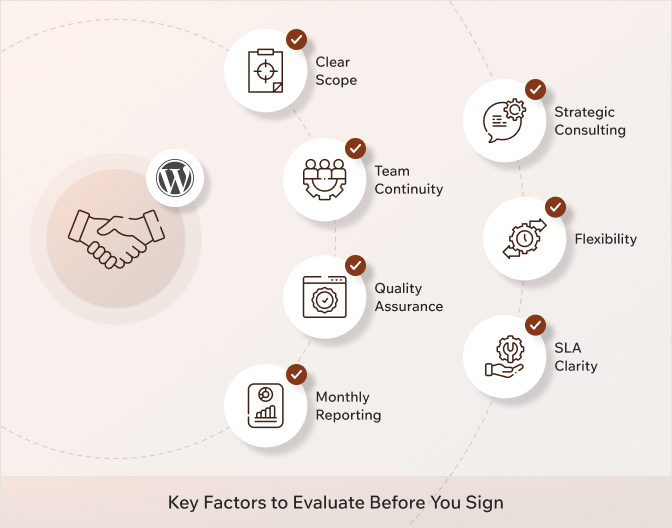
Before signing retainer agreements, look for:
- Clear scope: what is included, what is excluded, and how overages work.
- Team continuity: avoid rotating freelancer pools that lose context.
- Quality assurance: staging, code review, testing, and deployment discipline.
- Monthly reporting: Number of hours used, completed work, site health, risks, and next priorities.
- Strategic consulting: guidance on architecture, roadmap, and business growth.
- Flexibility: ability to scale retainer hours during launches
- SLA clarity: response times, escalation paths, uptime expectations, and coverage windows.
You should also ask about unused hours. Some agencies expire unused hours monthly, some roll them over for a limited period, and some convert them into backlog work. The policy should be stated clearly before the monthly fee begins.
Cultural fit matters too. Enterprise marketing teams need communication that is clear, fast, and practical. IT teams need documentation, reliability, and security discipline. The right WordPress agency can work with both.
How WPoets Helps Enterprises Maximize Website ROI
At WPoets, we help enterprise teams get the most out of WordPress through design, custom development, migrations, hosting, maintenance, and ongoing support.
We believe in delivering results early through an MVP-first approach, keeping communication simple and transparent at every stage, and continuing to refine and improve your website after launch so it can grow alongside your business.
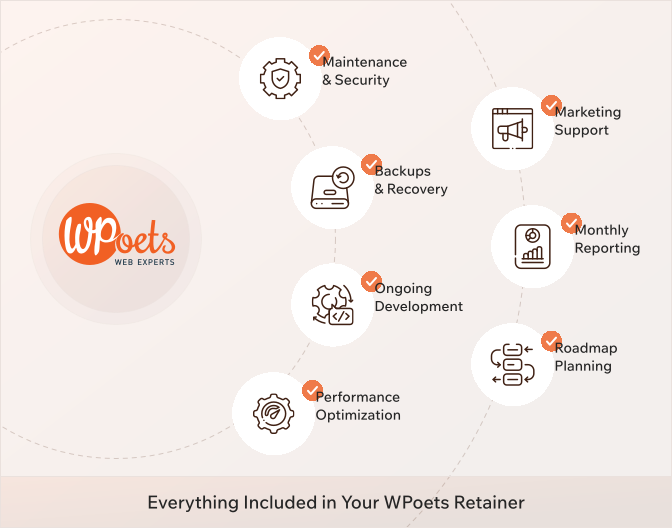
A WPoets WordPress development retainer includes the following:
- Maintenance and security: WordPress core, plugin, theme, and PHP updates; malware scans; security monitoring; and uptime monitoring.
- Backups and recovery: Retainers ensure regular backups of your site’s data. Regular backups are included in WordPress retainer services.
- Ongoing development: new templates, Gutenberg blocks, campaign pages, third-party API integrations, and custom functionality.
- Performance optimization: LCP, INP, CLS audits, caching, image optimizations, database tuning, and speed optimization.
- Marketing support: landing pages, form integrations, A/B testing setup, analytics custom event creation and tracking, CRM integrations, and content updates.
- Monthly reporting: a detailed breakdown of development hours, support hours, DevOps hours, security status, performance metrics, risks, and next steps.
- Roadmap planning: prioritization of new features, technical debt, and growth initiatives.
We also help businesses migrate from platforms like Webflow, Framer, Drupal, Sitecore, Kirby, Umbraco, Agility CMS, Ghost CMS, Kentico, AEM, and other CMS solutions to WordPress.
For organizations with complex publishing workflows or multi-step approval processes, our migration expertise, combined with ongoing development and support, ensures a smooth transition and helps maximize the value of their investment long after the new site goes live.
WordPress retainer costs vary for small- to mid-complexity needs, while enterprise plans can be higher depending on traffic, SLA, integrations, and velocity.
Small/Mid-level plans: Many providers offer basic to mid-level plans for ~$50–$600+. However, development-oriented retainers (with guaranteed developer hours, custom work, etc.) typically start around $750–$1,000 and go up to ~$1,500+ for more proactive support.
Enterprise plans: Premium retainers with dedicated teams, priority SLAs, and high concurrency often begin around $1,500–$2,000 and can exceed $3,000.
At WPoets, we have three plans.
- Care (Standard): 5 hours of monthly development, 10 support hours, and 5 DevOps hours
- Improvement (Pro): 15 hours monthly, 10 support hours, and 5 DevOps hours
- Growth (Epic): 30 hours monthly, 10 support hours, and 5 DevOps hours
Basic retainer plans start at $270 per month for monthly maintenance and support, but those usually cover only basic updates rather than enterprise-grade development services.
The right WordPress retainer cost depends on the number of development hours required for regular website work.
Monthly retainer fees provide predictable costs for ongoing website management, and a fixed monthly fee is easier to budget than surprise invoices after urgent repairs.
Which enterprise teams benefit most
A development retainer isn’t the right fit for every website. If your site is primarily a static brochure with only occasional updates throughout the year, a basic maintenance plan may be all you need to keep things running smoothly.
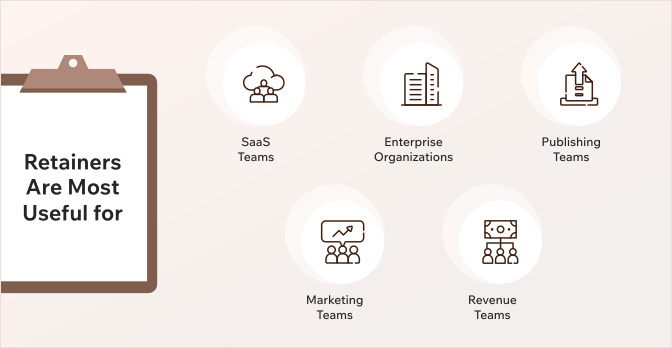
Retainers are most useful for:
- SaaS and product marketing teams running frequent campaigns, pricing tests, and product launches.
- Enterprise organizations with compliance, multi-region, multilingual, or multisite requirements.
- Content-heavy publishers, ed-tech platforms, and nonprofits with large taxonomies and traffic spikes.
- Marketing and communications teams without in-house WordPress developers.
- Companies whose websites directly support pipelines, donations, subscriptions, or customer education.
If your team needs development work every week or every month, a retainer is usually more cost-effective than quoting every task at an hourly rate. It also gives retainer clients priority access when urgent issues appear.
Measuring the Success of Your Enterprise WordPress Retainer
A retainer should be measured by outcomes, not only by activity. Hours matter, but business impact matters more.
Suggested KPIs:
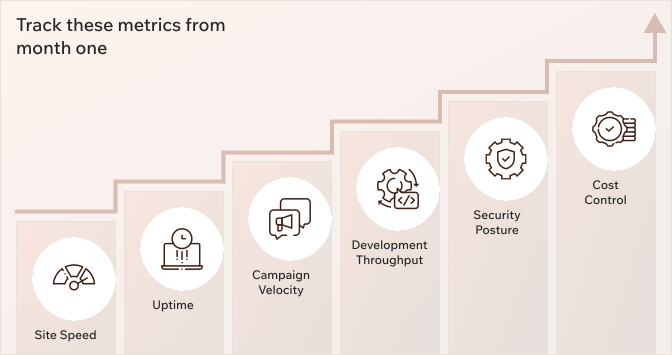
Track these metrics from month one:
- Site speed: page load time, mobile performance, and Core Web Vitals.
- Uptime: outage minutes, incident frequency, and response time.
- Campaign velocity: time from request to publish.
- Development throughput: completed tasks, new features, minor modifications, and release quality.
- Security posture: vulnerabilities found, patches applied, audits completed, and backup health.
- Cost control: emergency fixes avoided, project-based work reduced, and internal time saved.
At WPoets, monthly reporting ties completed work to business outcomes.
For example, a report should not only say “optimized images.” It should show whether performance improved, whether the page passed key speed checks, and whether that work supports business goals.
Set a baseline in month one. Then compare progress at 6 and 12 months. Over time, the value of a monthly retainer should show up in faster releases, fewer emergencies, better conversion paths, and a more stable website.
Conclusion
An enterprise website needs more than occasional fixes. It needs continuous support, ongoing maintenance, security monitoring, performance optimization, and a development team that understands the business behind the code.
A WordPress development retainer turns your website from a one-time project into an ongoing investment. With the right partner, you get predictable costs, priority access, allocated resources, and continuous improvements that support business growth.
Not sure whether a monthly retainer, a one-time project, or a hybrid approach is the best fit for your website? The WPoets team can review your current setup, understand your goals, and help you choose the engagement model that delivers the most value for your business.
Please get in touch with our team for a custom retainer proposal.
FAQ
What Is a WordPress Retainer? Why Does Your Business Need One?
A WordPress retainer is essentially a regular contract you’ve got in place between your business and a WordPress development agency, a deal where you pay a fixed monthly fee for whatever level of ongoing support, upkeep, and maintenance assistance you need.
Unlike one-off project work, which is done with a clear endpoint in mind, a retainer provides a steady supply of support to keep your website secure, up to date, and aligned with your business’s changing needs.
This type of agreement essentially gives you priority access to a team of pros for your site, leading to faster turnaround times on issues and enabling them to come up with proactive ideas to improve things. If your business needs regular updates, new features, and good old-fashioned reliable IT support without the hassle of employing full-time devs, then a WordPress development retainer is probably what you need.
For big companies and fast-growing startups, a retainer just makes good sense; it ensures your website stays fresh and evolves right in step with your marketing campaigns, customer needs, and business goals.
What’s included in a WordPress development retainer?
The exact scope depends on business requirements, but a WordPress development retainer typically includes:
- Ongoing WordPress core, plugin, and PHP updates
- Security monitoring, backups, and uptime monitoring
- Performance optimization and Core Web Vitals improvements
- Landing page and template development
- Custom Gutenberg blocks and content enhancements
- UX and conversion rate optimization improvements
- CRM, marketing automation, and third-party integrations
- Technical SEO implementation and support
- Strategic consulting and website roadmap planning
- Dedicated development hours for ongoing enhancements
- Design assets required for the website (banner images, icons, vector images, infographics, among others)
At WPoets, retainers are designed to combine maintenance, development, and continuous improvement to help businesses maximize their website’s value over time.
How much does a WordPress retainer cost?
The cost of a WordPress retainer depends on just how much hand-holding your site needs.
Basic maintenance retainers will probably start at a few hundred bucks a month. At the same time, a full-service plan that covers ongoing development, optimizing your site for speed, monitoring security, updating content, and generally keeping you on track can run $1,000+ a month. That’s the sort of deal that’s usually out of reach for small businesses and most startups.
Rather than paying out for a bunch of one-off fixes or projects, a retainer gives you the peace of mind of knowing exactly what you’re going to be paying out every month, and you also get to tap into a team that really knows your site inside out.
This gives you the freedom to keep tweaking your site to make it run faster, add new features, make it easier for users to find what they’re looking for, and stay on track with your business objectives without having to hire a whole team of in-house experts.
What’s the difference between a WordPress retainer and a maintenance plan?
A WordPress retainer is quite different from a maintenance plan, and it really shows when you’re talking about enterprise-level needs.
While a maintenance plan is all about keeping the basics covered: WordPress core, theme, and plugin updates, backups, monitoring for security threats, and making sure your site is online, a WordPress retainer is a far more strategic partnership.
For larger businesses, a retainer can mean ongoing custom development, fine-tuning your site’s performance to perfection, top-notch support, and continual improvement aligned with your business goals.
What that means for your website is not just keeping it secure and up to date, but actually letting it grow alongside your marketing efforts, the integrations you need, and the user experience you want.
And the best part is it all comes with a predictable fixed monthly fee, a set amount of time that you know you’ll get each month, so you’re not hit with surprise bills. This means you can turn on more support when you need it and slow down when you don’t, so you get faster results and a more proactive approach.
In essence, a maintenance plan will keep your site running, but a WordPress retainer will really help your site grow, innovate, and deliver a long-term return on investment.
Do I need a retainer, or is one-time project work better?
It depends on how actively your site supports your business.
Project-based work is the right choice for a complete redesign, a platform migration, or a major build with a clear finish line. It gives you a fixed scope, a fixed cost, and a defined delivery date.
But once that project launches, project-based work becomes expensive for ongoing needs. Every change requires a new scope, a new kickoff, and a vendor ramp-up, meaning a team that has never seen your codebase is solving problems that a retained team would handle in a fraction of the time.
A retainer is the better model when your site needs monthly development attention: new campaigns, integration updates, performance work, content changes, or UX/UI iterations.
At WPoets, we often pair an initial project (redesign or migration) with a retainer starting the month after launch, specifically to avoid the launch-and-abandon pattern.
How is a monthly WordPress retainer structured?
A WPoets retainer is built around three components:
A fixed block of hours is allocated each month, split between planned roadmap work, proactive maintenance, and a buffer for urgent or unplanned requests. Hours are not a vague allowance; they are tracked and reported transparently.
A defined maintenance layer runs continuously in the background (support + DevOps hours): updates, security monitoring, backups, uptime checks, and performance audits. This is not counted against development hours; it is part of the baseline service.
A monthly planning and reporting cycle keeps both sides aligned. At the start of each month, priorities are confirmed. At the end, you receive a report covering hours used, work completed, site health metrics, and next priorities.
The same core team stays on your account month to month, so context builds over time rather than resetting with every engagement.
How do WordPress retainer services work?
Once you start a retainer with WPoets, the first two to four weeks involve a technical and UX audit of your existing WordPress setup, plugins, hosting, custom code, and performance baseline.
From that audit, we build a roadmap balancing must-fix issues with continuous improvements.
From there, work flows through shared tasks that your team wants implemented on the website, with our suggestions, and includes weekly or bi-weekly check-ins between your team and ours.
All changes go through staging environments, code review, and testing before reaching production. At the end of each month, you receive a detailed report of what was done, what improved, and what is planned next.
The team assigned to your account- developer, DevOps, and technical lead or PM stays consistent. That continuity is what separates a retainer from an ad hoc support ticket system. The team learns your site deeply over time, which means faster execution, fewer errors, and better judgment on what to prioritize.
What are the benefits of our WordPress maintenance retainer?
A WordPress maintenance retainer means you’ve got a fully managed website maintenance team watching your back, providing ongoing support, and keeping your website up & running smoothly without you even thinking about it.
Instead of frantically trying to fix problems when they come up, your updates, security checks, backups, and performance tweaks are handled proactively to help prevent those pesky problems from biting you in the first place & causing you more headaches.
Plus, it means you’ve got a bunch of experts who are already familiar with your site & can jump on any issues that pop up, get improvements done in no time, & handle any new requirements as they come up.
With the peace of mind that comes from knowing exactly how much you’ll pay each month, and the flexibility to scale up support as your business grows, a retention agreement helps you avoid downtime, keep your site running as smoothly as possible, and give your users a better experience overall.
Over time, this steady attention keeps your website safe, reliable, and in line with what you want it to do for your business.
Published on Jul 24, 2026 | Updated on Sep 21, 2026