



Introduction
A Custom Post Type (CPT) is a core feature of WordPress that lets you go beyond the standard Posts & Pages. It helps you organize and display specialized content like Projects, Services, Portfolios, Testimonials, Events, or Team Members in a more flexible and scalable way tailored to your site’s needs.
What are Custom Post Types (CPTs)?
A Custom Post Type is a structured content container that organizes related information under its own label. Unlike regular posts or pages, CPTs allow you to separate content more logically and control how it’s managed and shown on your site. They are highly flexible, can have custom fields, taxonomies, and templates, and enable developers and site owners to craft unique content experiences within WordPress.
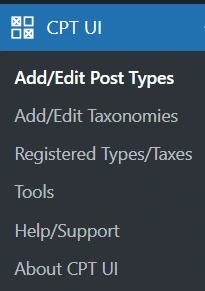
Screenshot 1: Custom Post Types
Common CPT examples include:
WordPress comes with a few built-in post types like posts, pages, and attachments, but most CPTs are created to fit the specific needs of a project.
Common examples include:
- Portfolio: Showcases completed work or projects with images, descriptions, and external links.
- Testimonials: Displays customer feedback with names, roles, and credibility indicators.
- Products: Manages store items with pricing, inventory, variations, and purchase options.
- Events: Lists upcoming or past events with dates, venues, speakers, and registration links.
- FAQs: Organizes frequently asked questions with clear, structured answers for quick reference.
- Staff: Features team member profiles with roles, photos, bios, and contact details.
- Case Studies: Highlights detailed project outcomes, challenges solved, and measurable results achieved for clients.
- White Papers: Provides in-depth research and authoritative insights on industry topics, trends, and solutions.
- E-books: Offers comprehensive, long-form educational content available for download or gated access.
- Success Stories: Showcases real customer achievements, experiences, and results using your product or service.
- Press Releases: official company announcements, updates, and media communication.
- Campaigns: Manages marketing initiatives with structured content, assets, and performance tracking.
- Webinars/Podcasts: Hosts recorded sessions, speaker details, and event resources for on-demand access.
- Careers / Job Listings: Displays open positions with role descriptions, responsibilities, and application details.
- Knowledge Base: Organizes articles, guides, and troubleshooting content for self-service support.
These custom types make it easier to present content in a structured, meaningful way.
Features and Flexibility
Custom Post Types offer several key features to enhance content management:
- Custom Labels and UI: CPTs have their own menu items in the WordPress dashboard labeled with user-friendly names.

Screenshot 2: Custom Labels and UI
- Custom Fields: Add metadata like title, description or additional text that is unique to the CPT.
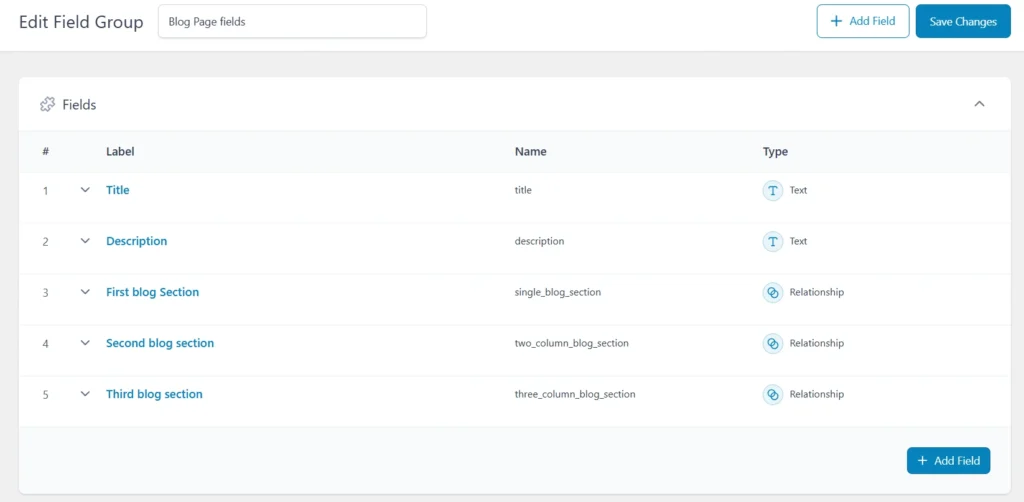
Screenshot 3: Custom Fields
- Custom Taxonomies: Create categories and tags specific to the CPT for better content classification.
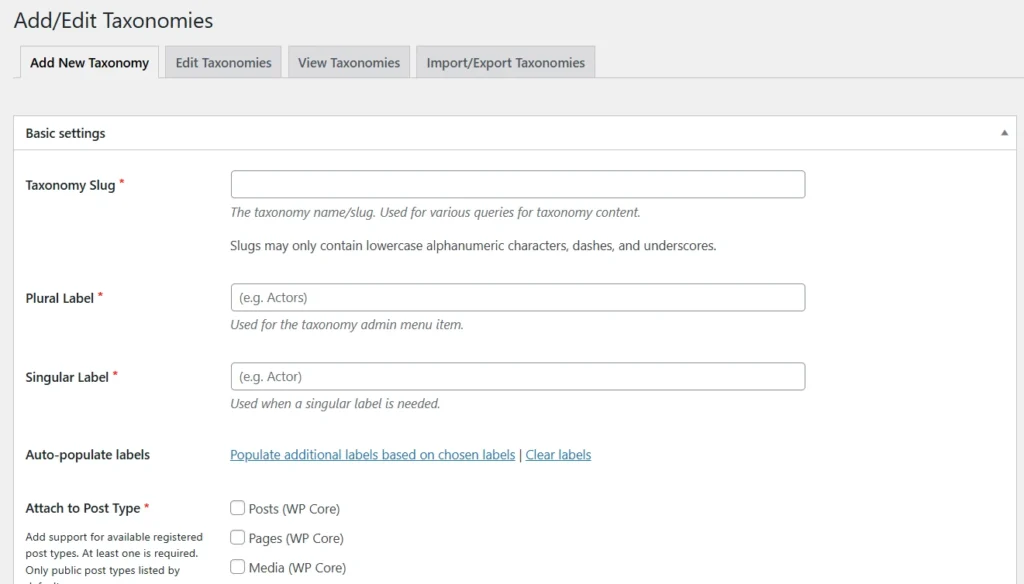
Screenshot 4: Custom Taxonomies
- Custom Templates: You can create dedicated theme templates to control exactly how each CPT’s content appears on the front end.
- REST API Support: CPTs work seamlessly with the WordPress REST API, making them perfect for headless or decoupled website setups.
Why Custom Post Types Are Relevant for Enterprise Websites Built on WordPress
In enterprise WordPress, CPTs create structured content workflows that align with business needs & scale across teams. They enable:
- Organized Content: Separate content types for easier management of large, complex websites.
- Consistent Presentation: Custom templates ensure each content type displays with the correct layout and design.
- Improved Performance: Load only the necessary content types, reducing database clutter and speeding up the site.
- Integration & Extensibility: Seamlessly connect with plugins, APIs, and third-party tools for marketing automation, CRM, analytics, and more.
How Custom Post Types Made WordPress Popular
Custom Post Types (CPTs) fundamentally reshaped WordPress and are one of the primary reasons it evolved into the world’s most widely adopted CMS. Here are the key drivers of that popularity:
WordPress Became a True CMS, Not Just a Blogging Tool
Custom Post Types (CPTs) transformed WordPress from a simple blogging tool into a powerful, flexible, enterprise-grade Content Management System.
Developers Could Build Completely Custom Applications
Custom post types allow developers to create structured content models tailored to any business requirement. This flexibility lets WordPress function as a full application framework, supporting everything from booking systems and directories to LMS platforms and complex enterprise portals.
Growth of Plugins and Themes Ecosystem
Custom post types enabled plugin developers to build specialized solutions such as ecommerce systems, event managers, job boards, and learning platforms. This expanded ecosystem transformed WordPress into a versatile platform that can adapt to virtually any use case without reinventing the core.
Enabled Headless and API-Driven Architectures
Custom post types deliver structured, predictable data via the REST API or GraphQL, making WordPress ideal for headless setups. Teams can use modern front-end frameworks like React or Next.js while relying on WordPress as a stable, scalable content backend.


